
Full Breakdown
Pompeii Wardrobe Unveils Intimate Glimpse of Daily Life Before Vesuvius
By Drooid · · How we work
In this breakdown
01
Discovery of a Sealed Closet
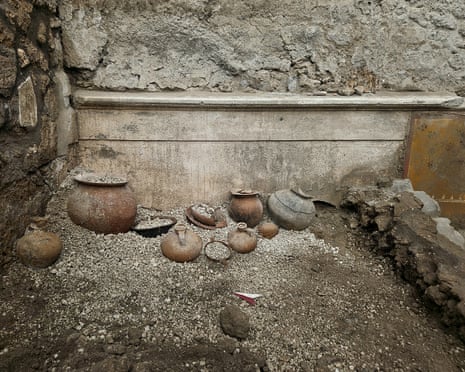
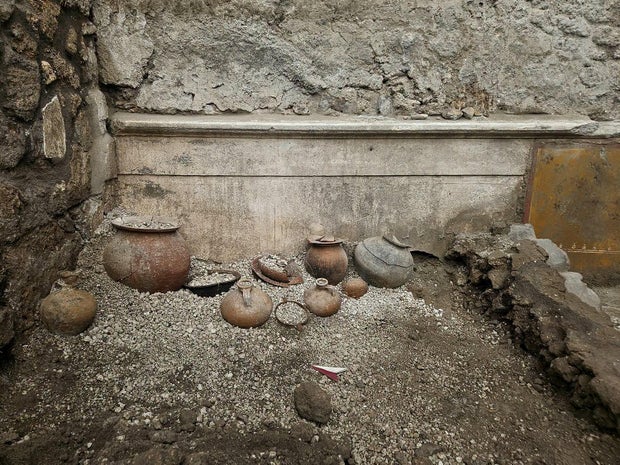
On October 29, 2026, archaeologists for the Pompeii Archaeological Park opened a wooden wardrobe sealed for almost 2,000 years in a house on Via dell’Abbondanza. The closet contained cosmetics, a perfume-burner, an incense burner, a bronze lantern, a glass balsamarium, lead weights in a faint wooden box, and various bronze, glass and ceramic vessels.
Watch
Related reporting
cbsnews
Video: The continuing discoveries at Pompeii
02
Context of the House
The dwelling, identified in earlier scholarship as the house of Cornelius Maximus, was first excavated in 1912. Inscriptions bearing his name are no longer visible, but the attribution persists in park communications. Current work focuses on rooms behind the façade as part of restoration of the adjacent Insula dei Casti Amanti.
Visual evidence
Images from the story
03
Artifacts and Their Significance
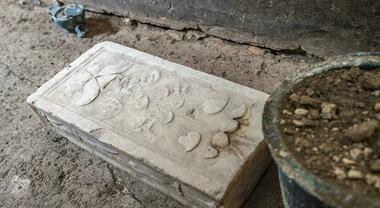
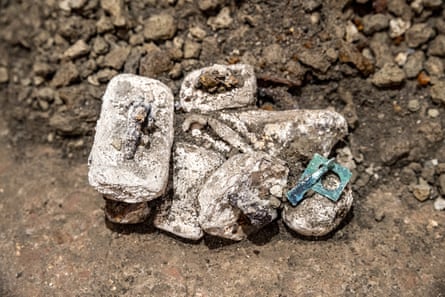
- Necklace (crepundia) – at least 20–24 miniature charms of bone, glass paste, faïence and rock crystal, depicting deities such as Bes and Mercury, plus hands, feet, pine cones and grape clusters.
- Coins – 38 bronze coins recovered in a woven “cistella,” indicating an abrupt departure.
- Lead weights – suggest commercial activity.
- Two mouse skeletons (*Apodemus sylvaticus*) found inside an amphora, highlighting ordinary urban pests.
These objects help reconstruct personal habits, work and memory-keeping practices, especially the role of crepundia as protective amulets and childhood rattles.
04
Data Summary
- Sealed period: ~2,000 years
- Location: House IX 11, 7, Via dell’Abbondanza, central Pompeii
- Artifacts: cosmetics, perfume bottle, incense burner, bronze lantern, balsamarium, lead weights, bronze/glass/ceramic vessels, refined snuff bottle, 38 bronze coins, >=20 miniature charms, 2 mouse skeletons
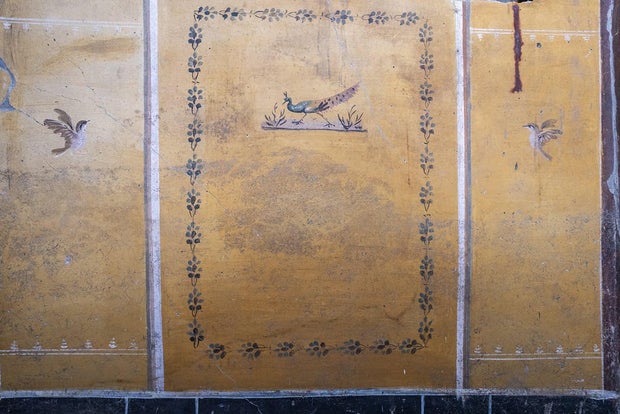
- Previous excavation: 1912; current focus on interior rooms and Fourth Style wall paintings
05
Official Statements & Responses
He noted that the coexistence of monetary and sentimental items points to a sudden departure at the moment of Vesuvius’s eruption. Zuchtriegel also highlighted the broader value of ordinary objects for restoring the human dimension of Pompeii’s past and described the ongoing effort to complete the excavation of the house.
06
Verbatim Quotes
- “We cannot reconstruct with certainty the identity of those who lived in the house, but these fragments bring us closer to their daily lives,” — Zuchtriegel, Pompeii director
- “Pompeii is not just a place of great works of art. It is also a place where the most ordinary objects restore the human dimension of the past,” — Gabriel Zuchtriegel, archaeological park director
- “A crepundia had a very special function,” — Gabriel Zuchtriegel, archaeological park director
07
Conflicting Reports & Gaps
Sources differ on the exact count of miniature charms: CBS News reports “at least 20,” Euronews “at least 24,” and The Guardian “more than 20.” No definitive inventory is available.
08
What’s Next
Archaeologists will continue exploring surrounding rooms and adjacent sectors, seeking further evidence of daily life and economic activity in the city buried in AD 79.