
Full Breakdown
Trump-Backed Oil Deal with Venezuela Begins First Shipment Amid Operational Hurdles
By Drooid · · How we work
In this breakdown
01
Core Event
On October 30, the first cargo of Venezuelan crude arrived in Texas under a partnership between the United States and North American Blue Energy Partners (NABEP). President Donald Trump called the shipment a “gift,” marking the inaugural delivery from 17 Venezuelan fields the administration called the “biggest oil deal in history.” Operational control of an additional 14 fields was transferred to NABEP on October 1 under agreements that set production targets for the company.
02
Background & Context
Announced in August, the deal gives the U.S. government a 35 % stake in NABEP’s parent and the right to purchase 20 % of output at production cost. NABEP, registered in the Bahamas and led by Venezuelan businessman Alejandro Betancourt, was previously the subject of money-laundering investigations linked to alleged embezzlement from state-owned PDVSA. The partnership was signed with Venezuela’s interim government headed by Delcy Rodríguez after the ouster of former President Nicolás Maduro in January.
Visual evidence
Images from the story


03
Data & Statistics
- The contract covers 17 oilfields with an estimated 64 billion barrels of reserves; experts say only about 10 billion barrels are realistically developable within the 25-year legal window.
- NABEP aims to lift output from roughly 224 000 bpd (mid-October) to more than 1 million bpd.
- The company reports having invested $1 billion of its own capital since 2024 and plans to raise reinvestment by up to 50 % annually.
- Approximately 5 000 employees and over 10 000 contractors are currently engaged by NABEP.
04
Official Statements & Responses
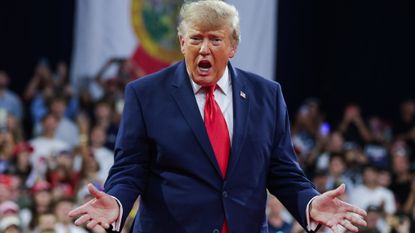
- President Trump hailed the shipment as a “gift” and said the deal benefits “the American people.”
- White House spokeswoman Taylor Rogers said production is growing and the agreement is delivering results for the United States.
- NABEP spokesperson Terry Wade asserted the company is on track and that invoices are being paid.
- Delcy Rodríguez emphasized Venezuelan sovereignty over the oil reserves while projecting revenues exceeding $209 billion.
- PDVSA Vice President Jovanny Martínez told state media the 1 million bpd target could be met within six to seven years.
05
Criticism & Opposition
- Opposition leader Maria Corina Machado questioned the contract’s transparency, saying she had not seen the agreement.
- An unnamed opposition figure described the deal as a “massive land grab” by the United States.
- Industry observers noted satellite analysis in early October found no drilling infrastructure at seven of the 17 fields, suggesting greater operational challenges.
06
On-the-Ground Reports
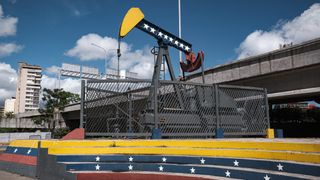
Oilfield workers and contractors reported idle heavy machinery, damaged facilities, oil leaks, and delayed payments at sites such as Petrozamora. Several workers said NABEP owes money to local partners, though the exact amount was not disclosed. Workers also noted a severe shortage of trained staff, with many wells in the Maracaibo basin requiring extensive repairs.
07
Conflicting Reports & Gaps
- Reserve figures vary: Trump’s claim of 64 billion barrels contrasts with expert estimates of about 10 billion developable barrels.
- Satellite imagery shows a lack of drilling rigs at several fields, while NABEP claims to have lined up 60 rigs and 70 pieces of heavy machinery for deployment.
- Output numbers differ: Betancourt cited 115 000 bpd at Petrozamora in September, whereas PDVSA internal data and independent analysts suggest production remains near 224 000 bpd overall.