
Full Breakdown
Iran’s Claims of Mine-Struck Tankers Clash with U.S. Assertions of a Cleared Strait
By Drooid · · How we work
In this breakdown
01
Core Incident
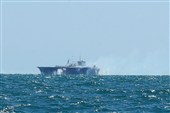
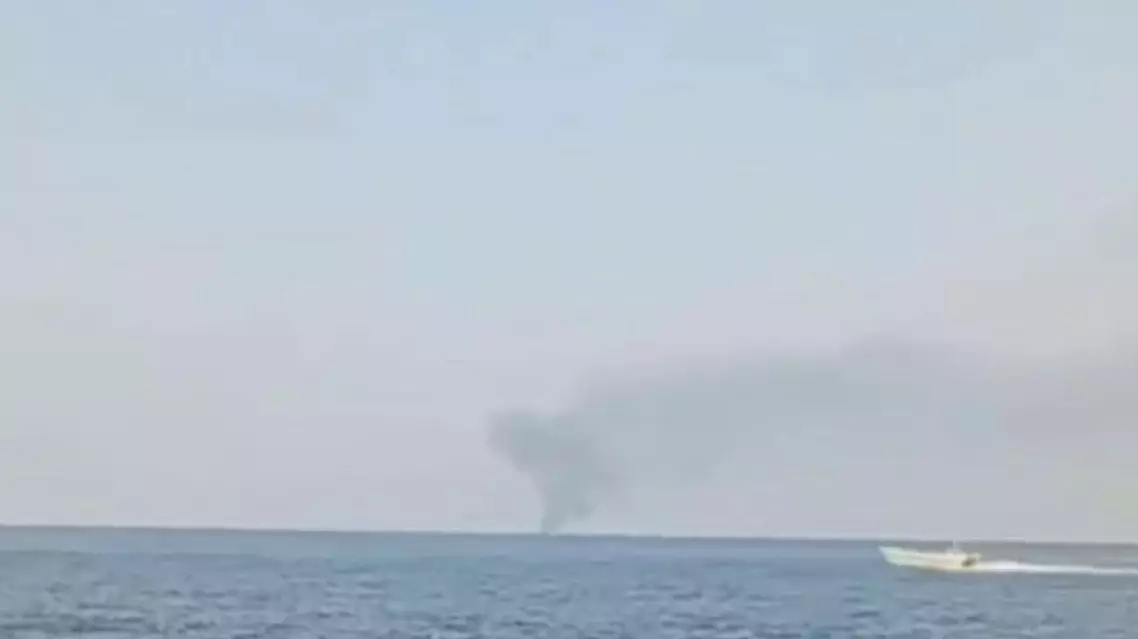
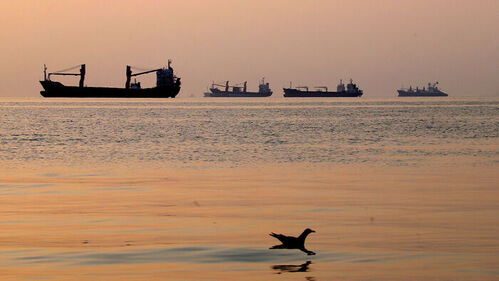
On October 30, the Islamic Revolutionary Guard Corps (IRGC) Navy said three oil tankers caught fire after striking naval mines while using “unauthorised routes” in the southern corridor of the Strait of Hormuz. The IRGC claimed the vessels had switched off radar, ignored radio warnings and were halted in the strait’s southern waters. One was described as a super-tanker carrying more than two million barrels of crude. The Royal Navy of Oman rescued 25 crew members from a burning Panama-flagged vessel about 1.6 nm off Musandam.
Watch
Related reporting
brightcove
Are global oil reserves sufficient to withstand renewed US-Iran war?
02
Background & Context
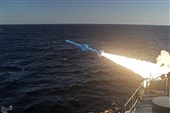
Since the U.S.–Israel war began on February 28 2026, Iran has required commercial traffic to coordinate with its authorities and avoid the southern route. The conflict has sparked a series of maritime attacks, including limpet-mine strikes and drone interceptions, as both sides vie for control of the chokepoint that moves roughly one-fifth of global oil shipments.
Visual evidence
Images from the story




03
Data & Statistics
- Iran reported three tankers hit mines on October 30 and a fourth super-tanker on October 27 (Iranian Navy).
- The International Maritime Organization logged at least 30 vessel attacks in October, the highest monthly tally since the war began.
- Kpler data show crude exports fell nearly 90 % in March 2026 but rebounded to about 11.1 million bpd in October, only 2 % below September levels.
- Freight rates for a super-tanker rose from $249,000 per day in early September to over $900,000 per day by early October, lifting transportation costs to roughly $21 per barrel.
04
Official Statements & Responses
- U.S. officials reiterated that forces remain in the region to keep major shipping routes open.
- The United Kingdom Maritime Trade Operations (UKMTO) reported a fire on a tanker north of Khasab, Oman, without detailing cause or casualties.
- Oman’s Maritime Security Centre confirmed the evacuation of 25 crew members from the Panama-flagged vessel and provided medical care, without identifying the attacker.
05
Conflicting Reports & Gaps
- Iran attributes the explosions to mines it laid to punish vessels using unauthorised routes, while CENTCOM denies mines in the recognised lanes.
- UKMTO’s fire report did not confirm whether the incident involved one of the IRGC-claimed tankers, leaving the causal link unverified.
- No independent verification exists for Iran’s claim that a U.S. unmanned surface vessel was destroyed; the U.S. military has denied any such loss.
06
Verbatim Quotes
- “Continued kinetic action around the Strait of Hormuz amidst doubts of a viable diplomatic pathway is keeping oil prices elevated in expectation of an escalation of the conflict in coming weeks,” — Saul Kavonic, head of energy research at MST Marquee.
- “On balance in terms of oil coming out, there hasn't been a massive impact,” — Mary Melton, senior tanker analyst at Braemar.
07
Why It Matters
The disputed narratives affect global oil markets: Brent crude traded above $117 per barrel on October 30, near wartime peaks. Analysts note that kinetic actions in the strait keep prices elevated, while the resilience of crude flows suggests shippers are adapting through “shuttle” operations that turn off transponders to reduce risk. The divergence between Iranian claims and U.S. assurances also complicates diplomatic efforts, as Qatari mediators continue negotiations aimed at preventing a broader escalation.