
Full Breakdown
U.S. Pulls Non-Emergency Staff from Saudi Arabia Amid Escalating Houthi Attacks
By Drooid · · How we work
In this breakdown
01
Core Event
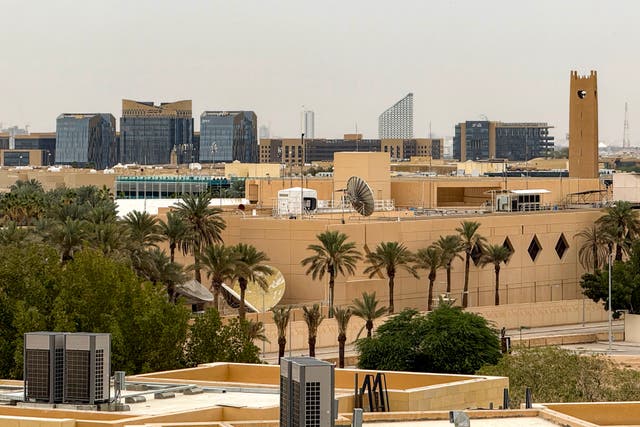
The U.S. State Department ordered all non-emergency government employees and their families to leave Saudi Arabia by 23 October due to “safety risks” from recent Houthi missile and drone strikes on Saudi civilian airports, hospitals and other infrastructure. The directive was issued by the U.S. Embassy in Riyadh and took effect on 23 October [Independent; USNews; AA].
02
Background & Context
The Yemen-based Houthi movement, aligned with Iran, has stepped up attacks on Saudi targets since July, after Riyadh struck Sanaa’s international airport. Recent operations include ballistic missile strikes on King Khalid International Airport on 10 October, killing at least 13 people and injuring hundreds [Independent], and claims of hitting the Ras Tanura oil refinery [MiddleEastEye]. The Saudi-led coalition has responded with air-defence interceptions and a “Dawn of Yemen” offensive, reporting 1,276 operations, the neutralisation of about 382 Houthi commanders, and damage to 140 military vehicles and weapons [MiddleEastEye].
Visual evidence
Images from the story
03
Timeline
- 10 October – Houthi missile barrage hits Riyadh’s international airport, killing 13.
- 23 October – U.S. Embassy orders non-emergency staff and families to depart.
- 30 October 2026 – Reuters and other outlets report the order and reiterate travel warnings; Saudi coalition announces recent interceptions of Houthi missiles and drones.
04
Data & Statistics
- 13 fatalities and “hundreds” injured in the 10 October airport attack [Independent].
- 1,276 Saudi-backed Yemeni operations in the past 24 hours, according to Colonel Majed al-Nuzaili [MiddleEastEye].
- 382 Houthi commanders “neutralised” in the same period [MiddleEastEye].
- 140 military vehicles, heavy weapons and ammunition depots destroyed or damaged [MiddleEastEye].
05
Official Statements & Responses
- The U.S. [USNews; AA].
- Saudi officials reported the partial reopening of King Khalid International Airport while noting continued delays at Jeddah and Dammam airports [AA].
- The coalition announced interception and destruction of two ballistic missiles and a cruise missile aimed at Riyadh and western Saudi Arabia [AA].
- Houthi spokesperson Yahya Saree said the group targets “oil facilities and military bases” and denied any strike on the Mecca region on the day of the reported drone interception [SundayGuardianLive].
06
Criticism & Opposition
Omani Foreign Minister Badr al-Busaidi criticised the United States for failing to provide regional security guarantees, stating, “Washington’s inability to provide security guarantees has become evident.” [MiddleEastEye]
07
Conflicting Reports & Gaps
- The Houthi claim of striking Ras Tanura was not confirmed by Saudi authorities, who reported only a contained fire near the terminal [MiddleEastEye].
- The coalition said it intercepted a Houthi drone over the Mecca region, while the Houthi spokesperson denied any operation targeting Saudi territory that day [SundayGuardianLive].
08
Verbatim Quotes
- “Washington’s inability to provide security guarantees has become evident,” — Security Council Mohsen Rezaei
- “It is forbidden to form a government with them” — Benjamin Netanyahu
09
What’s Next
The State Department has not set a timeline for lifting the departure order. Saudi authorities continue to advise extreme caution for air travel and have warned against photographing missile interceptions. Diplomatic efforts involving the Mecca Alliance and Qatari mediators aim to de-escalate the broader U.S.–Iran-Israel confrontation.