
Full Breakdown
Netanyahu’s Likud Claims Election “Stolen” Amid Record Arab Turnout and Foreign-Funding Allegations
By Drooid · · How we work
In this breakdown
01
Election Outcome and Immediate Dispute
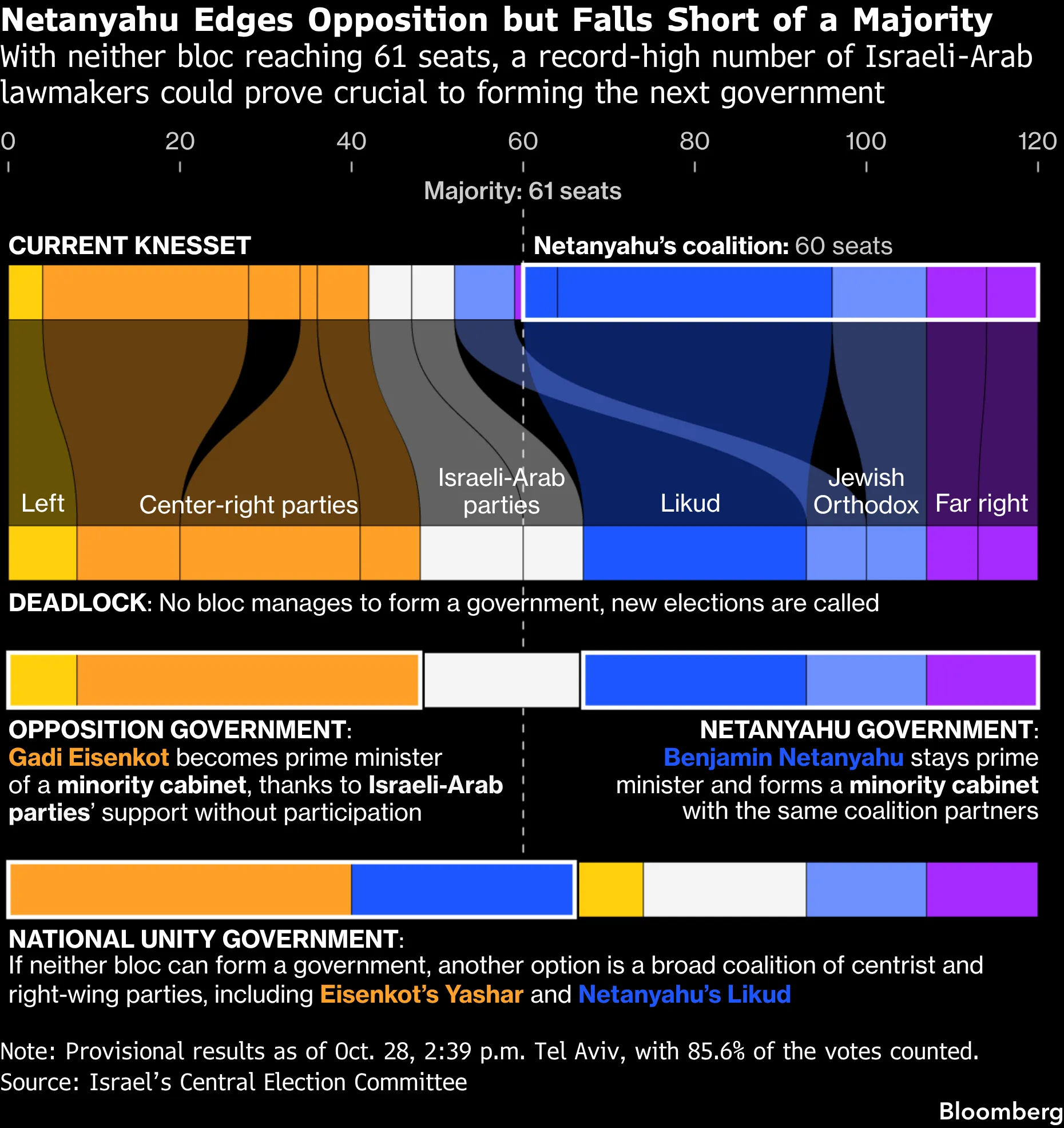
Final counts after the October 27, 2026 vote show Prime Minister Benjamin Netanyahu’s bloc with 53 seats and the opposition bloc led by Gadi Eisenkot with 48 seats. Arab-majority parties secured a historic 19 seats. No bloc reached the 61-seat majority. The Central Elections Committee (CEC) certified the results on October 30, 2026 and sent them to President Isaac Herzog.
Watch
Related reporting
cbsnews
Video: Netanyahu claims Arab minority voters stole Israel election as race heads to stalemate
cbsnews
Video: Israel's election results are unclear. Here's what comes next.
02
Allegations of Foreign Influence
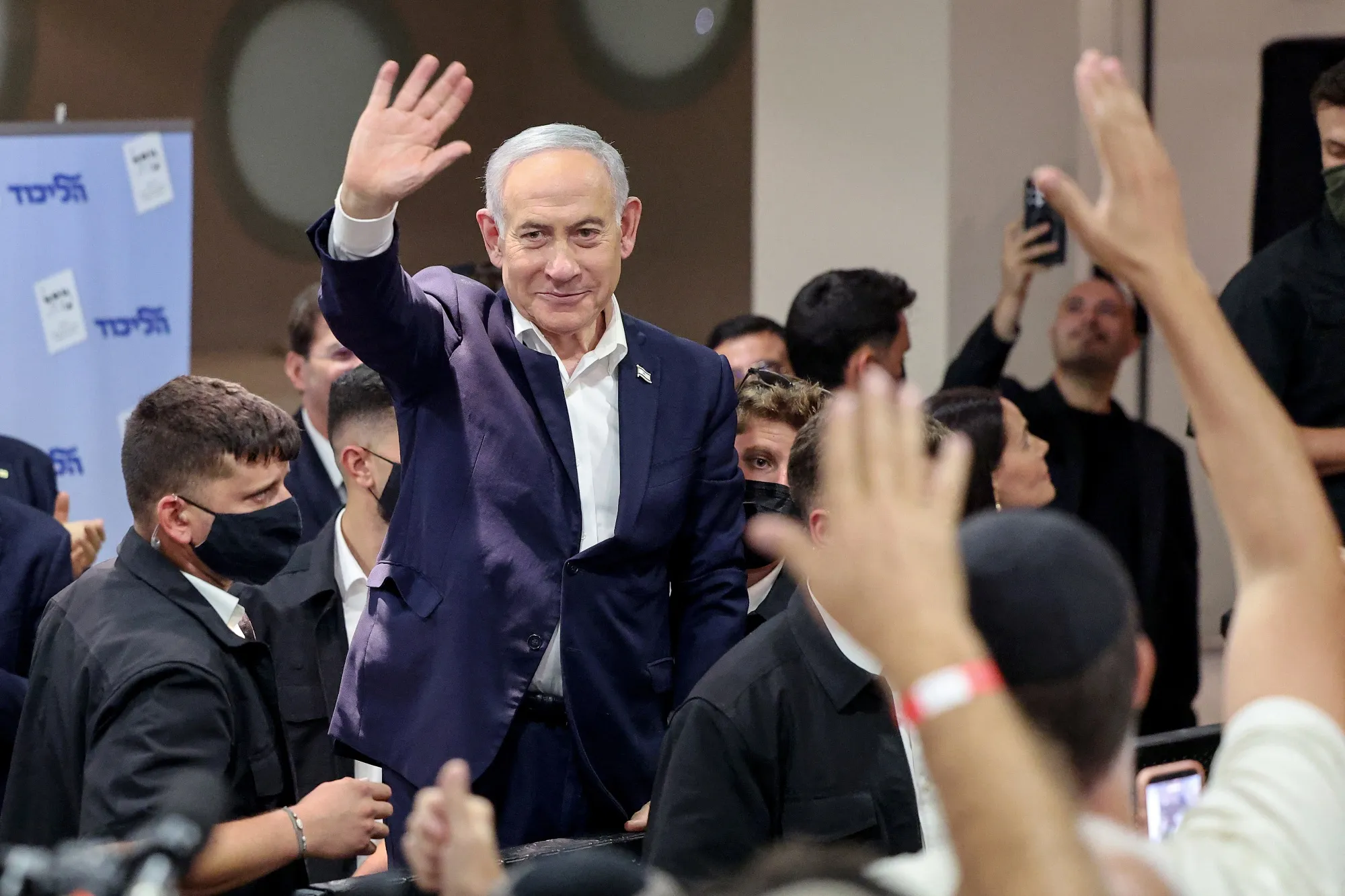
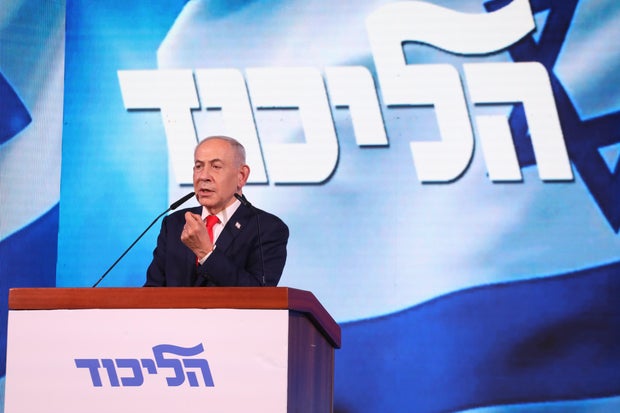
On October 30, 2026, Likud declared “Israel’s elections have been stolen,” accusing Arab parties of an “attack on democracy” financed by Qatar to “Islamize Israel.”
- Justice Noam Sohlberg, CEC chairman, wrote to Shin Bet chief David Zini that “serious suspicions have been brought to my attention regarding improper influence on the elections through foreign funding by outside actors operating against Israeli interests.”
- Qatar’s foreign ministry, via spokesperson Majid Al-Ansari, denied any interference, calling the accusations “ridiculous and dangerous.”
Visual evidence
Images from the story



03
Official Responses
- President Isaac Herzog urged a thorough investigation while warning against tarnishing an entire community that exercised its democratic right.
- Shin Bet said its probe is “focused and bounded” and does not implicate any party or demographic group.
04
Opposition and Criticism
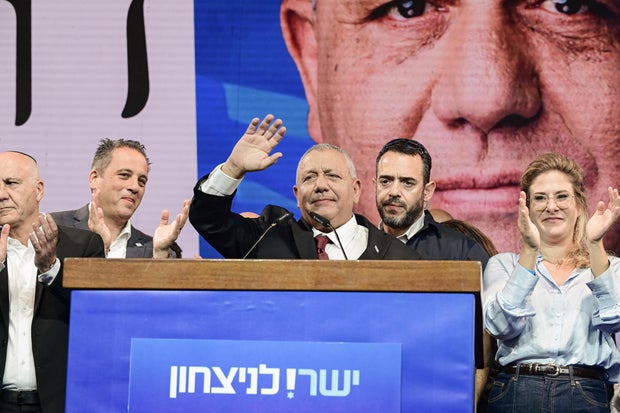
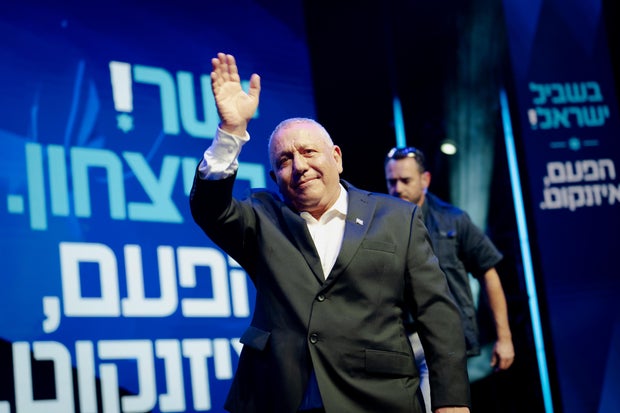
- Gadi Eisenkot, former military chief, accused Netanyahu of “an improper influence operation … delaying the publication of the election results.”
- Mansour Abbas, chairman of Ra’am, denied any link to the alleged funding.
- Yair Golan, leader of the Democrats, called the Likud campaign an “ugly delegitimization effort” targeting Arab voters.
- Yousef Jabareen, Joint List leader, said “Netanyahu was defeated at the ballot box. No incitement campaign will change the voters’ decision.”
05
Conflicting Reports & Gaps
Qatar denies involvement, while Israeli officials cite “intelligence” suggesting possible foreign money flows. No public evidence has been released, and Shin Bet has not disclosed the investigation’s scope. The CEC’s acting director-general called the allegations “entirely unfounded,” yet the committee has asked Shin Bet for findings within a week.
06
Data & Statistics
- 53 seats – Netanyahu’s bloc (including Likud’s 27).
- 48 seats – Opposition bloc.
- 19 seats – Arab parties (Joint List 11, Ra’am 8).
- 77.7 % – Voter turnout reported by opposition leader Yair Lapid.
07
Why It Matters
The deadlock gives Arab parties a potential king-maker role, a scenario not seen since 2021. Their participation could affect security policy, the ongoing multi-front war, and the “Islamization” narrative used by Likud.
08
What’s Next
- Shin Bet is expected to deliver a report to the CEC within a week, after which the committee will decide whether to certify the results.
- President Herzog will consult party leaders before assigning the coalition-building task; if no bloc secures 61 seats, a new election could be called for early 2027.
- Opposition parties have indicated willingness to negotiate with Arab legislators, while Likud urges Zionist parties to exclude Arab parties from any governing arrangement.