
Full Breakdown
Photo Cancelled as European Diplomats Refuse to Pose with Russia’s Lavrov
By Drooid · · How we work
In this breakdown
01
Core Event: Cancellation of the G20 “Family” Photo
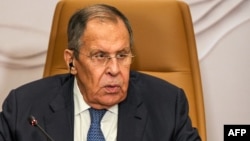
On October 30 2026, the United States halted the traditional group photograph of G20 foreign ministers in Atlanta after several European delegations announced they would not stand alongside Russian Foreign Minister Sergei Lavrov. U.S. officials said the decision was taken to keep the focus on substantive discussions rather than a diplomatic spectacle.
02
Background & Context
The G20 foreign-ministerial meeting is a two-day pre-summit gathering that precedes the leaders’ summit scheduled for December 14-16 2026 in Miami. Russia remains a G20 member despite its invasion of Ukraine in February 2022, which triggered extensive sanctions. Recent U.S. policy under President Donald Trump has softened some sanctions and announced a diesel-import deal with Russia, heightening tensions with European allies.
Visual evidence
Images from the story

03
Timeline
- October 30 2026: G20 foreign ministers convene in Atlanta; Rubio opens the talks and notes a “productive meeting.”
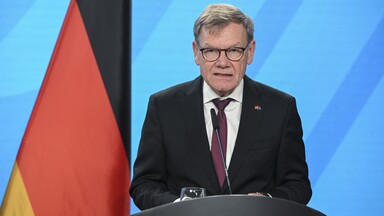
- October 30 2026: European officials, including Poland’s Radoslaw Sikorski and Germany’s Johann Wadephul, state they will not join a photo with Lavrov.
- October 30 2026: U.S. officials announce the photo is removed from the agenda.
- October 31 2026: Media reports detail the fallout and the continued two-day agenda.
04
Official Statements & Responses
U.S. Secretary of State Marco Rubio told the plenary that he hoped for “a productive meeting” and emphasized cooperation on energy, food security and supply-chain resilience.
Poland’s Deputy Prime Minister Radoslaw Sikorski called the cancellation “the right decision,” saying posing with Lavrov would signal a return to “normality” with Russia.
German Foreign Minister Johann Wadephul warned that “there is no normality with Russia” and urged that controversies be addressed at the negotiating table rather than in a ceremonial setting.
05
Criticism & Opposition
Ian Kelly, former U.S. ambassador to Georgia, described the invitation of Lavrov as “politically boneheaded,” arguing it could undermine Western unity on the Ukraine war.
Democratic Senator Jeanne Shaheen criticized President Trump’s approach, stating “Donald Trump needs to wake up” on the issue of engaging with Moscow.
06
Data & Statistics
- The G20 comprises 19 countries plus the European Union, representing roughly 80 % of global GDP.
- Russia controls about one-fifth of Ukrainian territory, according to multiple sources.
07
Why It Matters
The photo dispute highlights divisions within the G20 over how to engage with Russia while the war continues. The United States’ ability to secure consensus on broader economic and security issues—such as critical-mineral supply chains, energy stability and freedom of navigation—may be hampered by the lack of a unified stance on Russia’s participation.
08
Verbatim Quotes
- “We are in a critical moment — I would call it a moment of choosing, and I would say not just for my country, the United States of America, but frankly, for the world,” — State Marco Rubio
- “In no case will there be a family photo with European partners and Mr Lavrov together because ... there is no normalcy with Russia,” — German Foreign Minister Johann
- “It seems politically boneheaded to invite him,” — Ian Kelly
09
What's Next
The G20 foreign-ministerial talks will continue through October 31 2026, focusing on energy, food security and supply-chain resilience. Attention now turns to the December leaders’ summit in Miami, where the presence of Russian President Vladimir Putin remains uncertain. The U.S. midterm elections on November 3 2026 are also slated to shape the political context for any further engagement with Russia.