
Full Breakdown
International Dockworkers Strike Targets Arms Shipments
By Drooid · · How we work
In this breakdown
01
Core Action – Coordinated Walkouts on October 30
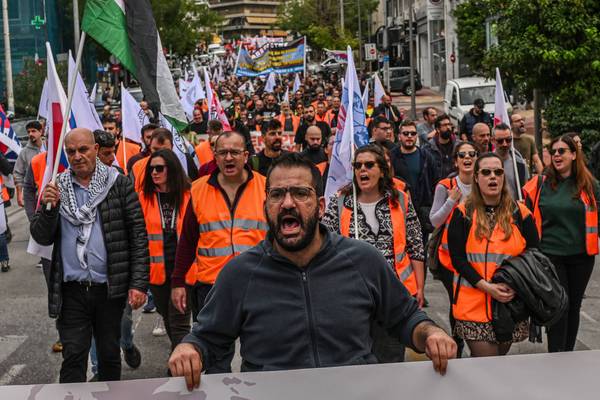
On October 30 dockworkers in more than 100 ports across 22 countries halted operations to protest the use of commercial ports for weapons, ammunition, military equipment and troop movements. The action involved at least 25 trade unions and affected 113 ports, including major hubs such as Piraeus, Valencia, Le Havre, Algeciras, Genoa, Tangier Med and India’s Nhava Sheva. In Greece roughly 3,000 dockworkers and seafarers joined the walkout, disrupting cargo handling and ferry services.
02
Background & Context
The strike is part of the “No Harbour for Genocide” campaign, which coordinates actions against the militarization of ports. Earlier, dockworkers’ unions from more than 35 European countries issued the Istanbul Declaration, demanding that port facilities not be used to transport weapons destined for war zones. The campaign links the flow of arms through civilian ports to conflicts in the Middle East, the Black Sea and the Gulf, and calls for an end to “war economies” that profit from militarization.
Visual evidence
Images from the story


03
Data & Statistics
- Geographic scope: 113 ports in 22 countries; unions from at least 25 nations participated.
- Human cost: PENEN reported 28 attacks on vessels in the Gulf during the first 21 days of October and 570 confirmed attacks in the Black Sea this year, resulting in 40 seafarer deaths and hundreds of injuries.
- Cargo impact: Activists estimate the strike could delay 52,000 containers and affect cargo worth roughly $2.8 billion.
- Regional concentration: Mediterranean ports such as Tangier, Piraeus, Gioia Tauro and Genoa handle a large share of transshipment traffic; the striking Mediterranean ports account for about 63 % of container activity in the sea and 74 % of activity between southern France and Piraeus.
- Labor demands: Unions also called for pay rises, better working conditions, doctors on board vessels crossing war zones, and an end to stagnant wages.
04
Official Statements & Responses
The Greek union PENEN emphasized the human toll of maritime warfare, noting the “hundreds” of casualties among seafarers and the record number of attacks in the Gulf. The “No Harbour for Genocide” campaign framed the strike as a means to enforce an embargo that governments have announced but not implemented, arguing that refusing cargo at each port would halt the flow of weapons.
Supply-chain analysts offered a tempered view. Marcus Baker, global head of marine, cargo and logistics at Marsh, said a 24-hour strike was unlikely to cause material disruption to global trade, though it could affect perishable goods and time-sensitive shipments. Judah Levine of Freightos warned that the strike might exacerbate congestion at already-backed-up ports such as Genoa.
05
Impact & Why It Matters
The coordinated walkout highlights the strategic role of civilian ports in global arms logistics and raises questions about the accountability of commercial infrastructure in wartime supply chains. By linking labor action to broader anti-war objectives, dockworkers aim to pressure governments and shipping companies to reconsider the use of ports for military purposes. The strike also underscores ongoing concerns about seafarer safety, as repeated attacks in conflict zones have led to significant loss of life and injury among maritime crews.