
Full Breakdown
Congress Holds the Final Say on Contested U.S. Election Results
By Drooid · · How we work
In this breakdown
01
Core Event: Congressional Authority Over Disputed Seats
When a House or Senate race is challenged after state certification, the losing candidate may invoke the Federal Contested Election Act. The House Administration Committee (or Senate Rules Committee) reviews the case and recommends a recommendation to the full chamber, which then votes on who is seated. This authority becomes pivotal when a handful of close races could determine which party controls Congress.
Watch
Related reporting
ex
Vance is asked about affordability in America - and immediately starts talking about Senator's a**
02
Background & Context
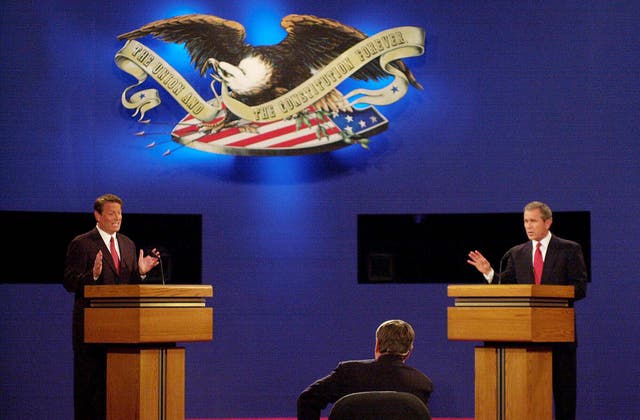
The practice dates to the first Congress in 1789, which recorded 634 contested House elections and, since the adoption of direct popular election for senators in 1914, at least two dozen Senate contests. Historically, most disputes occurred during the Civil War, Reconstruction, the Gilded Age, and early Jim Crow era, with a peak of 38 contested House races in 1895. Litigation surged after the 2000 Supreme Court decision that ended the Bush-Gore presidential dispute; a UCLA-compiled sample identified 756 election cases in the 2023-2024 cycle, a 14.3 % increase from 2019-2020.
Visual evidence
Images from the story
03
Data & Statistics
- Historical contests: 634 House elections and ~24 Senate elections since 1789.
- Average per cycle: Just over five contested House races.
- Record year: 38 House races contested in 1895.
- Current landscape (2026): Inside Elections rates 18 House races as toss-ups.
- Litigation volume: 756 cases filed in the 2023-2024 cycle, the highest on record.
04
Official Statements & Responses
Victoria Bassetti, senior advisor at the States United Democracy Center, emphasized that candidates, outside groups, and the administration will “fight those tooth and nail” in any recount or contest. The Constitution’s language granting each chamber final authority underscores the political dimension of these disputes, especially as Republicans hold slim majorities in both chambers. Experts note that partisan tactics—such as filibustering a seating vote or denying quorum—could shape outcomes. Unresolved challenges when the new Congress convenes in January will be transferred to incoming members, potentially affecting the organization of the chamber and the election of a speaker.
05
Verbatim Quotes
- “Those within the recount or contest margin of error – the candidates, outside groups and the administration – will fight those tooth and nail,” — Victoria Bassetti
06
Timeline
- 1789: First Congress meets; 634 contested House elections recorded.
- 1914: Direct popular election of senators begins; at least two dozen Senate contests recorded thereafter.
- 2000: Supreme Court decision in Bush v. Gore spurs increase in election litigation.
- 2023-2024: Record 756 election cases filed nationwide.
- January 6, 2021: Capitol attack underscores heightened political stakes.
- October 30, 2026: Reuters reports on the looming impact of contested midterm races.
07
Why It Matters
If Democrats capture a net four seats in each chamber, they could secure control despite ongoing disputes. Prolonged contests could leave key seats vacant, impairing legislative function and influencing the balance of power. The ability of Congress to seat members amid legal challenges directly shapes the composition and effectiveness of the federal government during intense partisan competition.