
Full Breakdown
Veto Standoff Threatens UN Peacekeeping Mission in Western Sahara
By Drooid · · How we work
In this breakdown
01
Core Event: Reciprocal Vetoes Stall MINURSO Renewal
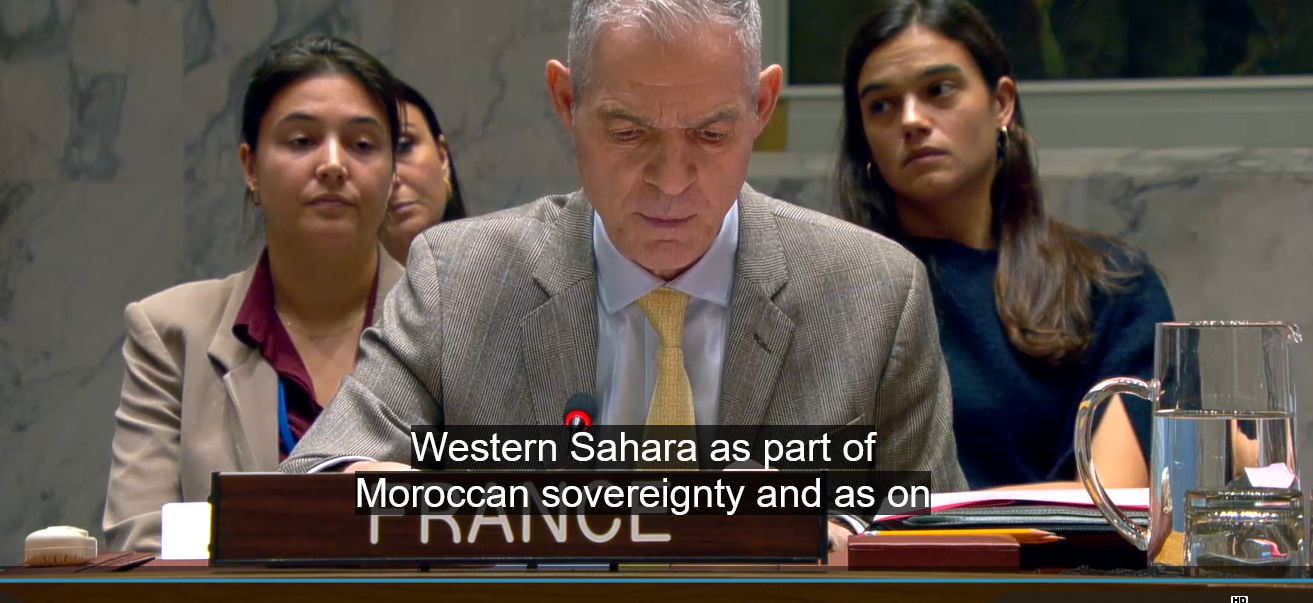
On 30 October 2026, the United Nations Security Council failed to adopt a resolution on the Western Sahara dispute after Russia vetoed a United States-drafted text and the United States vetoed a Russian-drafted alternative. Both proposals sought to extend the mandate of the United Nations Mission for the Referendum in Western Sahara (MINURSO), but each contained divergent political language. The deadlock leaves MINURSO without a renewed mandate, which expires on 31 October unless the Council reaches a last-minute agreement.
02
Background & Context
Western Sahara, a former Spanish colony, has been contested since Morocco’s 1975 annexation. The Polisario Front, backed by Algeria, demands a self-determination referendum, while Morocco asserts sovereignty over the territory it calls its “southern provinces.” A 1991 UN-brokered ceasefire created MINURSO to monitor the truce and prepare for a referendum that has never been held due to disagreements over voter eligibility. In 2025 the Council endorsed Morocco’s autonomy proposal as the basis for negotiations.
Visual evidence
Images from the story
03
Data & Statistics
- MINURSO fields 155 military personnel and is funded at $62 million for the fiscal year that began in June 2026.
- The U.S. draft would have extended MINURSO until 31 October 2027, renamed the mission MINUSO, and made Morocco’s autonomy plan the sole framework for talks.
- The Russian draft called for a straightforward one-year renewal without name changes or political preconditions.
- Reports differ on vote tallies; some note the U.S. draft received 11 votes in favour, 1 against (Russia) and 3 abstentions, while others describe the Russian draft’s defeat by eleven “against” votes.
04
Official Statements & Responses
- Michael Waltz, U.S. ambassador, called the veto “the political murder of the mission.”
- Morocco’s royal palace welcomed the failure to renew MINURSO, stating that the mission’s personnel, equipment and symbols should leave the “southern provinces” in the coming days while reaffirming commitment to the ceasefire.
- Oxfam warned that the loss of MINURSO’s monitoring could undermine security, stability and civilian protection.
05
Criticism & Opposition
Oxfam highlighted humanitarian risk to refugees in Algerian camps, noting high rates of anemia and malnutrition among children. The Polisario Front staged a rally near the Smara camp, denouncing Morocco’s autonomy plan and warning that the UN’s failure to extend the mission could “trigger further tension and instability” for the Sahrawi people.
06
Conflicting Reports & Gaps
Sources disagree on precise vote counts for each draft and on the extent of a refugee census provision in the U.S. proposal. No consensus exists on whether a shortened extension will be negotiated before the 31 October deadline.
07
Verbatim Quotes
- “The loss of MINURSO’s monitoring and de-escalation functions risks undermining security and stability, with serious consequences to civilians and prospects of a peaceful resolution,” — Oxfam
- “The political murder of the mission,” — United Nations Vassily Nebenzia
- “Unfortunately, some members of this Council have used their veto to preserve the letter 'R' for referendum in the mission's name,” — Michael Waltz
08
What’s Next
The Security Council must decide whether to adopt a compromise extension before the 31 October deadline. Absent a renewal, MINURSO’s legal basis for ceasefire monitoring, mine action and de-escalation would lapse, creating uncertainty for the on-ground peace process and for civilians in both Moroccan-controlled areas and Polisario-run refugee camps.