
Full Breakdown
Federal Purchase of Minnesota Prison Raises Cost-Benefit Questions
By Drooid · · How we work
In this breakdown
01
Purchase Overview
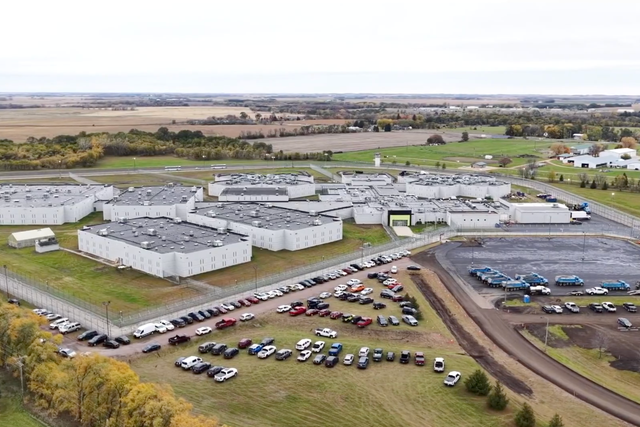
In August 2026, the Department of Homeland Security (DHS) paid $495.6 million to acquire the 1,600-bed Prairie Correctional Facility in Appleton, Minnesota. The price was roughly six times the $75 million the private-prison operator CoreCivic had offered to the Minnesota Department of Corrections in May 2025. The facility, closed for 16 years, had been built 34 years ago and could house up to 1,600 inmates at full capacity.
02
Background & Context
CoreCivic, a Tennessee-based private prison company, originally approached the state in 2025 with a proposal that included upgrades to the dormant prison. Minnesota officials declined, citing staffing challenges and the cost of building housing for the roughly 500 employees needed to run the site. The federal government, pursuing an expansion of immigration-detention capacity under the Trump administration’s immigration enforcement agenda, later purchased the same property. The acquisition occurred amid a broader DHS spending surge that includes a $464 million purchase of ten used jets, many of which remain idle.
Visual evidence
Images from the story
03
Official Statements & Responses
Safia Khan, deputy commissioner and chief of staff for the Minnesota Department of Corrections, described the federal price as a “shock” compared with the earlier negotiations. Paul Schnell, Minnesota Corrections Commissioner, said he was “stunned” by the six-fold increase and could not understand the justification. The Government Accountability Office (GAO) issued a September report warning that ICE’s rapid expansion of detention facilities, including this purchase, risked “waste” of taxpayer dollars and had not assessed long-term affordability.
04
Criticism & Opposition
Minnesota Attorney General Keith Ellison called on the House and Senate Homeland Security Committees, as well as the House Oversight Committee, to investigate why the federal government paid “almost half a billion” for a prison valued at $75 million. He characterized the transaction as an “outrageous” misuse of taxpayer funds, especially amid rising costs from tariffs and foreign conflicts.
05
Data & Statistics
- Purchase price: $495.6 million (federal) vs. $75 million (state offer).
- Facility capacity: 1,600 beds; previously closed for 16 years.
- CoreCivic’s projected earnings from operating the prison: $75 million per year for five years.
- DHS’s related spending: $464 million for ten used jets; $1.07 billion on 11 warehouse conversions, with a $20 million loss after a course change.
The transaction highlights a stark disparity between state and federal valuations of detention infrastructure and raises ongoing concerns about fiscal oversight of immigration-related spending.