
Full Breakdown
Record Housing-Affordability Ballot Measures Shape 2026 Midterms
By Drooid · · How we work
In this breakdown
01
The Core Vote: Housing Measures on Four State Ballots
Voters in California, Rhode Island, Massachusetts and Hawaii will decide on statewide initiatives that directly target the nation’s housing-affordability crisis. California’s Proposition 1 would let the state issue up to $11.25 billion in general-obligation bonds for affordable rental units and veteran home-ownership loans. Rhode Island’s Question 2 proposes $120 million in bonds for construction, rehabilitation and preservation of affordable housing. Massachusetts’s Question 7 would lower the minimum lot size for single-family homes to 5,000 sq ft, a change the group Legalize Starter Homes estimates could generate 2,200-5,700 new homes each year. Hawaii’s Question 2 would amend the state constitution to permit “RISE” tax-increment bonds that finance water, sewer, drainage and road infrastructure needed for new housing districts.
02
Background: Rising Cost Burden
The U.S. Census Bureau’s American Community Survey shows the share of homeowners spending at least 30 % of income on housing rose from 23.4 % in 2024 to 24.2 % in 2025. Among renters, the figure edged up from 48.2 % to 48.3 %. California has the highest homeowner burden at 32.6 %, and its renters are the third-largest burdened group at 55.5 %. Rhode Island, Massachusetts and Hawaii each have homeowner burden rates between 27.8 % and 28.5 %, with Hawaii’s renters most cost-burdened at 55.1 %.
Visual evidence
Images from the story

03
Details of the Measures
- California Proposition 1 – Authorizes up to $11.25 billion in bonds; $7.2 billion would fund the purchase, construction or renovation of an estimated 40,000 rental units, primarily through low-interest loans to developers. An additional $1.25 billion is earmarked for veteran home-ownership loans, with the remainder supporting infrastructure, farm-worker housing and tribal grants.
- Rhode Island Question 2 – Would issue $120 million in bonds to finance affordable-housing construction, rehabilitation, property acquisition and related infrastructure improvements.
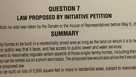
- Massachusetts Question 7 – Allows towns to permit single-family homes on lots as small as 5,000 sq ft. Proponents estimate the change could add 2,200-5,700 homes annually, contributing to the state’s goal of 222,000 new homes by 2035.
- Hawaii Question 2 – Creates a constitutional amendment enabling counties to issue tax-increment bonds beyond existing debt limits to fund infrastructure that supports affordable-housing development. Future bonds would be repaid from additional property-tax revenue generated as values rise within designated districts.
04
Official Statements & Responses
- Eric Maribojoc, business and real-estate professor at UNC-Chapel Hill, said there are “no simple levers” to improve affordable housing, but regulatory reforms and budgetary support can make production “simpler, faster and less costly.”
- Governor Gavin Newsom (California) backs Proposition 1, arguing that substantial state spending is essential to fill funding gaps for shovel-ready projects.
- The Tax Foundation of Hawaii testified that the RISE amendment is redundant because tax-increment financing has existed since 1985 and could expose counties to repayment risks if projected revenues fall short.
05
Criticism & Opposition
- Sen. Tony Strickland (R-Huntington Beach) opposes Proposition 1, citing the disproportionate emphasis on veteran loans relative to the overall bond size.
- The Tax Foundation of Hawaii also opposes the RISE amendment, warning it duplicates existing tools and could burden local taxpayers if projects underperform.
06
What’s Next
- Election Day: Voters cast ballots in early November.
- California: Preliminary results are expected shortly after polls close; certification and posting of results will follow in the weeks after the election.
- Massachusetts: Measures that pass will take effect 30 days after certification, with implementation dates set by the state.
The outcomes will determine whether state-level financing and zoning reforms become a new norm for tackling America’s housing-affordability challenge.