
Full Breakdown
Micro Ponds: A Simple Way to Boost Urban Garden Wildlife
By Drooid · · How we work
In this breakdown
01
The Rise of Micro Ponds in Urban Gardens
Recent garden commentary notes a shift away from elaborate water features toward compact “micro” ponds. While 1990s trends favored decorative fountains and large streams, contemporary designers and homeowners are favoring tiny, self-contained water bodies that can fit in a space no larger than an A3 sheet of paper. The article highlights a mother who installed such a pond using rocks, terracotta seedling pots and two metal ducks, illustrating how modest the scale can be.
02
From Show-Stoppers to Subtle Habitat Builders
The piece observes that even high-profile garden shows now feature restrained steel-clad trickles or mirrored surfaces rather than grand fountains. A 2022 award-winning rewilding garden with beaver-gnawed twigs is cited as an example of the current preference for naturalistic, low-maintenance water elements. The author argues that the popularity of micro ponds reflects a broader desire for functional wildlife support rather than purely aesthetic display.
Visual evidence
Images from the story
03
Building a Micro Pond: Materials and Placement
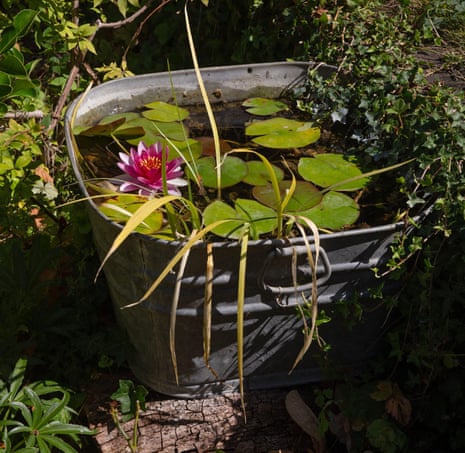
According to the guide, the essential requirement is a watertight container—anything from a galvanized bucket to a plastic storage box will suffice. If leakage occurs, a pond liner can be added. The bottom should be lined with large, stable objects such as rocks, old bricks or upturned plant pots to provide perches for insects, amphibians and small mammals. Placement should allow some sunlight but avoid full-sun exposure, which can trigger excessive algae growth. Once filled with rainwater, the pond can be planted with hardy aquatic species; the author mentions receiving a four-plant kit that produced resilient yerba mansa and slender club rush after five years.
04
Ecological Benefits for Small Gardens
Micro ponds create a miniature ecosystem that attracts dragonflies, damselflies, frogs, newts, birds, bats and hedgehogs. The author notes that these ponds serve as a “delicious buffet” for predators, helping control garden pests such as slugs. The presence of water also supports beneficial insects and provides breeding sites for amphibians, contributing to overall garden biodiversity.
05
Practical Care Tips
To keep the pond healthy, the article advises ensuring adequate light while preventing full-sun exposure, monitoring algae levels, and allowing the pond to self-regulate with minimal intervention. Adding solid structures for wildlife to perch on and using rainwater as the primary fill source are recommended for low-maintenance operation. The author emphasizes that, despite their small size, micro ponds are “easier than you think” and can be a rewarding addition to any compact garden.