
Full Breakdown
Canada Pursues EU “Associate Membership” to Reduce U.S. Dependence
By Drooid · · How we work
In this breakdown
01
Core Event
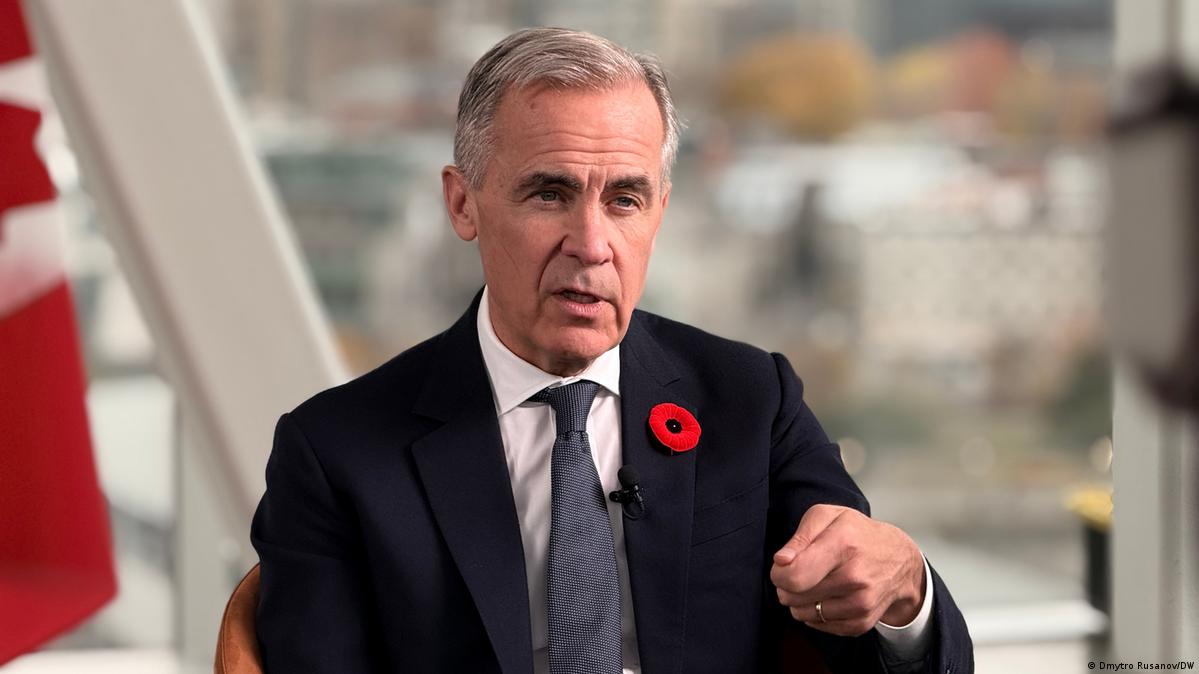
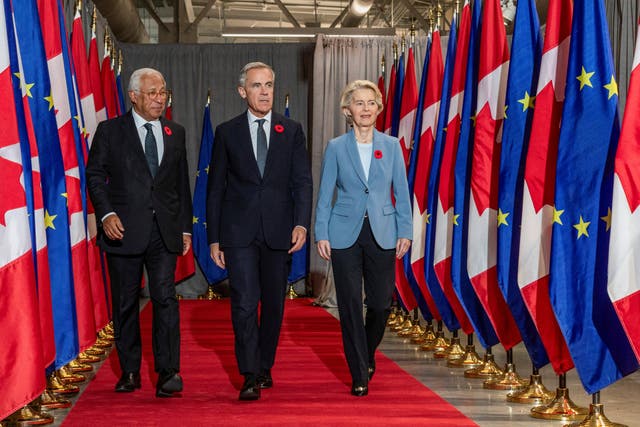
At a two-day summit in Montreal, Canadian Prime Minister Mark Carney announced that Canada will work toward the deepest possible partnership with the European Union short of full accession, describing the goal as “associate membership.” He said negotiations will continue through the coming months, with a follow-up summit slated for 2027 to define the arrangement’s substance, scale and scope.
02
Background & Context
Carney framed the initiative as a response to Canada’s “overdependence on the United States.” Ongoing trade disputes with President Donald Trump, including 50 percent tariffs on roughly $20 billion of Canadian imports, have highlighted the vulnerability of relying on a single partner. The government therefore seeks to diversify by deepening ties with “like-minded” European countries.
Visual evidence
Images from the story






03
Data & Statistics
- According to Statistics Canada, the United States accounted for 71.7 % of Canadian merchandise exports in 2025, while the EU accounted for about 9 %.
- Negotiated items include a digital trade pact, European Investment Bank financing for Canadian critical minerals, joint AI-security research, and plans for a supercomputing collaboration.
04
Official Statements & Responses
Carney emphasized that the partnership is not intended as a “marketing exercise” and that the exact terminology is secondary to tangible benefits for Canadians. European Commission President Ursula von der Leyen reiterated that geography should not limit the depth of cooperation, noting that shared values are the primary driver. European Council President António Costa described the arrangement as potentially the closest EU relationship with a non-European country.
05
Criticism & Opposition
German Chancellor Friedrich Merz and other EU members have objected to the “associate member” label, arguing that EU treaties contain no legal basis for such a status.
06
Conflicting Reports & Gaps
Sources differ on whether the term “associate member” appears in the joint declaration. Some drafts referenced the designation, while the final statement uses the phrase “ever-closer association” and omits “associate member” altogether. The legal definition and rights attached to the proposed status remain undefined, leaving the exact nature of future cooperation uncertain.
07
Why It Matters
Diversifying trade and security ties aims to shield Canada from unilateral U.S. pressure, bolster sovereignty, and open new markets for Canadian industries such as critical minerals, AI, and digital services. The alliance also seeks to coordinate responses to climate change, supply-chain resilience, and geopolitical instability.
08
Timeline
- August 26 2025 (occurred): Carney met German Chancellor Friedrich Merz in Berlin.
- September 16 2026 (occurred): Ursula von der Leyen proposed Canada’s “associate member” status at the European Parliament.
- July 19 2026 (scheduled): Photo-release event associated with the summit.
09
Verbatim Quotes
- “The lesson we've taken, Canadians as a whole, is we're overdependent on the United States. Too closely connected to the United States. And we need to build our strength here at home and diversify and deepen our partnerships with like-minded countries internationally,” — Mark Carney
- “What does that mean? It means the closest possible partnership without being a full member of the European Union, because Canada is not in Europe geographically and therefore cannot have accession.” — Mark Carney
- “Above all, this is about sovereignty,” — Mark Carney