
Full Breakdown
Italy’s Cost-of-Living Protests Mobilize Tens of Thousands
By Drooid · · How we work
In this breakdown
01
Core Demonstrations Across Italy
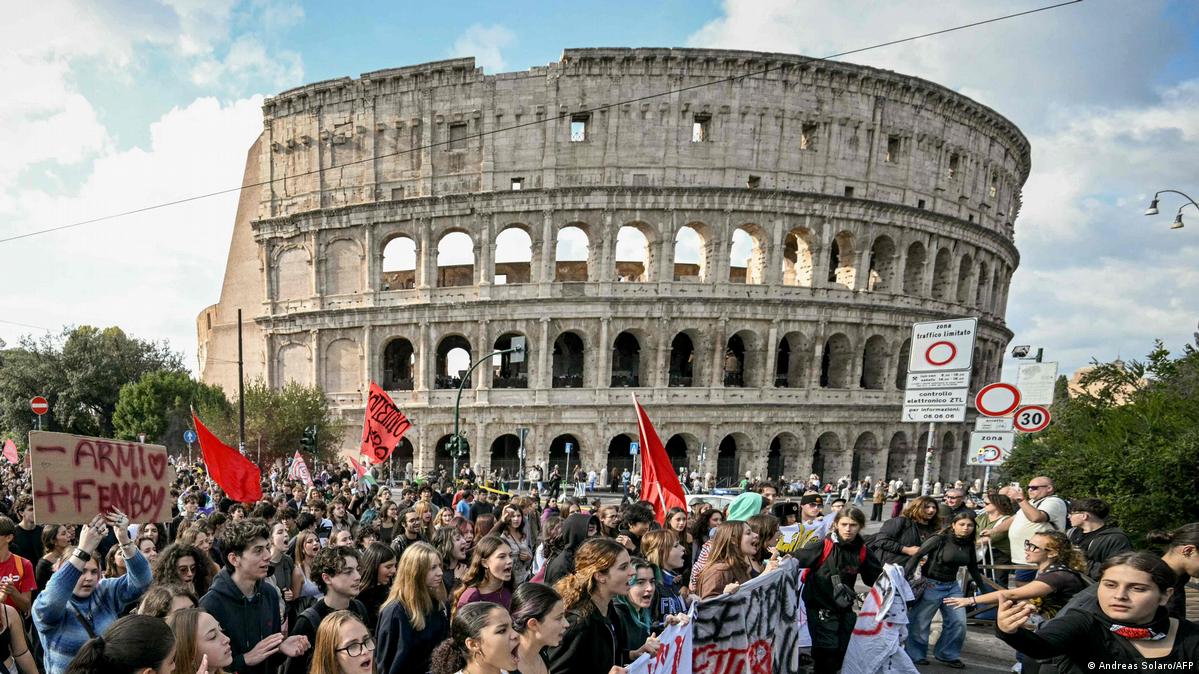
On a Friday in late October 2026, tens of thousands of students, teachers, retirees and other workers marched in dozens of cities—including Rome, Milan, Turin, Bologna, Genoa and Naples—demanding more education funding and relief from soaring living costs. The rallies followed weeks of student tent camps, school occupations and a general strike called by the USB trade union that also drew truck drivers, taxi drivers and farmers. Minor skirmishes were reported in Turin; no major clashes were confirmed by midday.
02
Background and Recent Tensions
The protests build on earlier student occupations and are inspired by similar movements in France and Spain. Demonstrators also criticize the government’s rising defence budget, arguing it diverts resources from social needs. The unrest follows the October 17-18 weekend of clashes between youth and police in Milan, after which the Meloni government tightened public-gathering laws while easing rules on detaining minors (occurred).
Visual evidence
Images from the story



03
Government Response
Prime Minister Giorgia Meloni announced a €175.2 million aid package for truck drivers, farmers and fishermen hit by high fuel prices linked to the Middle-East war. The draft 2027 budget under discussion includes an annual bonus of €2,500 for workers under 30.
04
Voices from Protesters
University student Beatrice Chilelli, 21, told AFP that students are “at a breaking point,” unable to afford tuition and rent that can reach €1,200 per month for a single room in Rome. Laura Teresi, an 18-year-old spokesperson for the OSA student movement, warned of a “massive” mobilisation to denounce re-armament policies and the “endless budget cuts to teaching.”
05
Verbatim Quotes
- “I hope this can provide answers for young people in general... who feel that the state doesn't care about them,” — Giorgia Meloni, criticized prime minister