
Full Breakdown
Two Foreign Nationals Die in Suspected Electrocution at Bengaluru’s Conrad Hotel Pool
By Drooid · · How we work
In this breakdown
01
Incident Overview
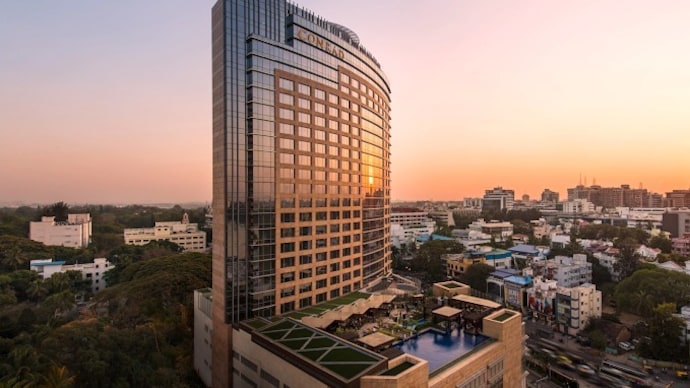
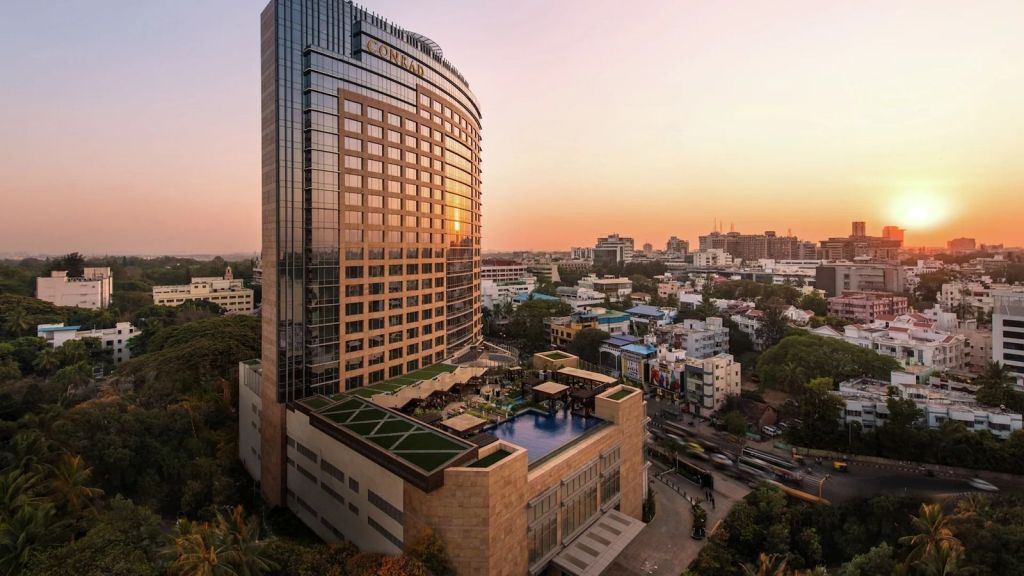
On the evening of October 30, two guests at the Conrad Hotel in Bengaluru’s Halasuru area died after a suspected electrocution in the third-floor swimming pool. The victims were identified as Alexander Maximilian Theiss, 57, a Lufthansa crew member, and Juraj Horvat, 45, an IBM project manager. Two others—a 41-year-old American tourist, Mathew Desantis, and 28-year-old pool attendant-lifeguard Rahul Tiwari—were injured while attempting a rescue. All four were taken to Manipal Hospital and are reported to be out of danger. Police have registered a case and opened an investigation.
02
Key Individuals
- Alexander Maximilian Theiss – German, Lufthansa flight-crew member.
- Juraj Horvat – Slovak, IBM project manager.
- Mathew Desantis – American tourist.
- Rahul Tiwari – Indian pool attendant and lifeguard.
- Silvia Ottawa – wife of Alexander Theiss, who filed a police complaint.
- Dr Mabel Vasnaik – Head of Emergency Medicine, Manipal Hospital.
- Seemant Kumar Singh – Bengaluru Police Commissioner.
Visual evidence
Images from the story




03
Timeline
- October 20 – Theiss checked into the Conrad Hotel.
- October 30 – Suspected electrocution in the pool; two deaths, two injuries.
- October 31 – Hotel posts notice that the pool will be “closed for maintenance” until November 30.
04
Investigation and Findings
Police have cordoned off the pool and are examining the hotel’s electrical installations, focusing on the underwater lighting system as a possible source of current leakage. The Deputy Commissioner of Police (East) confirmed a case has been registered and the probe will assess any safety lapses. A Bescom official, cited by police, suggested earthing problems might be involved.
05
Official Statements & Responses
Lufthansa issued a condolence statement confirming the death of a crew member during a layover but gave no further details. The hotel’s management has not commented beyond the maintenance closure notice.
06
Verbatim Quotes
- “The cause of death was electrocution,” — Dr Vasnaik
07
Data & Statistics
- Victims’ ages: 57 (German) and 45 (Slovak).
- Injured parties’ ages: 41 (American) and 28 (Indian).
- Hospital: All four patients were treated at Manipal Hospital and are reported to be out of danger.
08
Why It Matters
The incident highlights concerns over electrical safety in luxury hotels that host international travelers and airline crews. The negligence complaint filed by a victim’s spouse and the involvement of multiple regulatory bodies could have legal and reputational implications for the Conrad Hotel, part of the Hilton Worldwide portfolio. Ongoing investigations will determine whether technical faults or maintenance lapses caused the pool to become electrically charged, influencing future safety protocols for similar establishments.