
Full Breakdown
King Charles III’s Two-Day State Visit to Guyana Highlights Environment, Trade and Calls for Slavery Accountability
By Drooid · · How we work
In this breakdown
01
Core Event
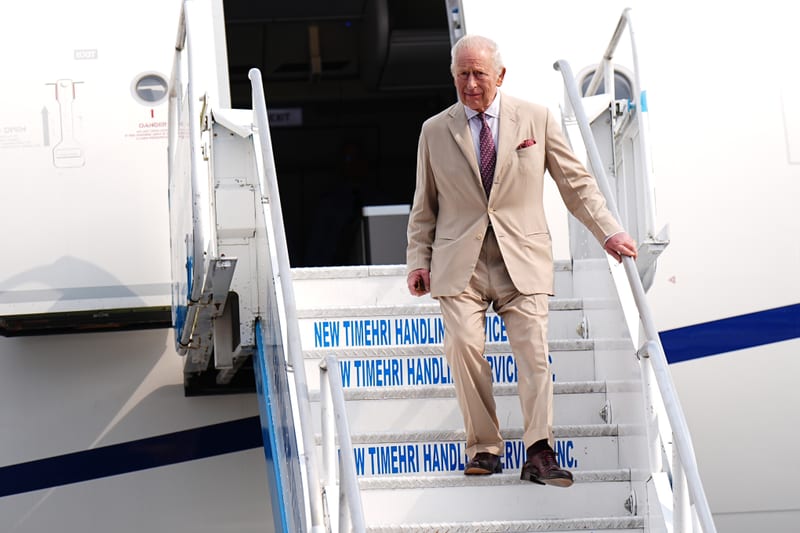
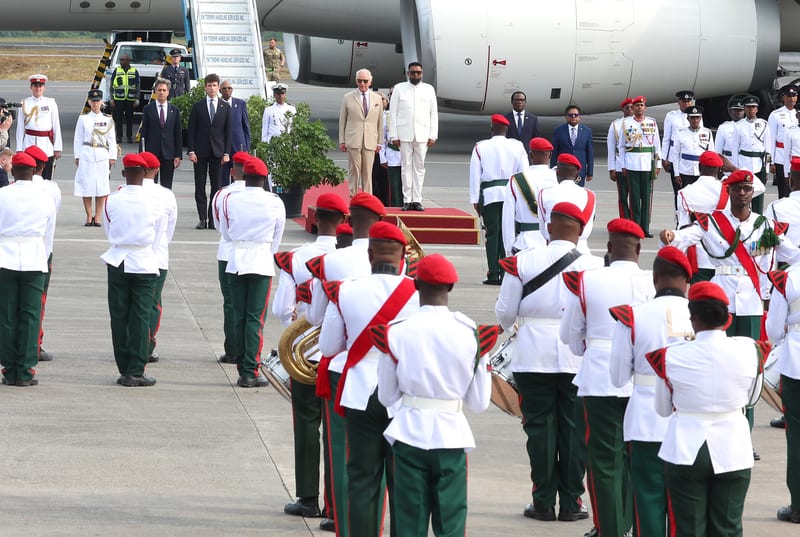
On October 29, 2026, King Charles III arrived at Cheddi Jagan International Airport in Georgetown for a two-day state visit, the first by a British monarch since the nation’s independence. He was received by President Mohamed Irfaan Ali, UK Foreign Secretary Ed Miliband, British High Commissioner Joseph Fisher and senior Guyanese officials. The itinerary included a bilateral meeting at State House, a state reception, visits to the Georgetown Botanical Gardens and the coastal seawall, and participation in the second Global Biodiversity Alliance Conference at the Arthur Chung Conference Centre. The visit concluded on October 30, 2026 with a reception for British businesses and local stakeholders.
02
Background & Context
The trip marks the 60th anniversary of diplomatic relations between Guyana and the United Kingdom, a milestone first noted by several outlets. It also follows a nine-day Caribbean tour that began in the Bahamas on October 27, 2026. Guyana, a former British colony, was the site of major slave revolts in the 19th century; its present population of roughly 840,000 is about 36 % Black descendants of enslaved Africans and 50 % of East-Indian descent, reflecting historic labor patterns. President Ali has repeatedly requested a formal apology for Britain’s role in the trans-Atlantic slave trade, a demand that frames part of the diplomatic backdrop.
Visual evidence
Images from the story



03
Data & Statistics
- Guyana’s forested area: 18 million hectares.
- Norway’s 2009 pledge to protect the forest: US$250 million.
- Carbon-credit revenue earned by Guyana in recent years: US$353 million.
- Hess Corporation’s 2023 agreement to purchase carbon credits: US$750 million over ten years.
- Annual trade between Guyana and the United Kingdom: US$2.2 billion.
- UK Export Finance earmarked for Guyanese projects: US$3 billion.
- Population: ? 840,000; 36 % Black, 50 % East-Indian.
04
Official Statements & Responses
He framed environmental stewardship as a solution to “enormous existential threats.” President Ali praised the monarch’s leadership on climate and announced that Guyana will set aside 30 % of carbon-credit proceeds for development projects in Indigenous Amerindian communities.
05
Why It Matters / Impact
The visit intertwines three strategic strands: showcasing Guyana’s pioneering carbon-credit program, deepening UK-Guyana trade and investment ties, and confronting the legacy of slavery. By spotlighting forest conservation and mangrove restoration at the Georgetown seawall, the King reinforces the global biodiversity agenda while aligning with Guyana’s low-carbon development strategy. Simultaneously, the diplomatic emphasis on slavery acknowledges historical grievances, though the lack of a formal apology may influence future reparations debates within the Commonwealth.
06
What’s Next
- The Global Biodiversity Alliance Conference will convene scientists, Indigenous representatives and innovators to discuss rainforest protection and sustainable development.
- Discussions at the Iwokrama International Centre are slated to explore expanded rainforest conservation initiatives.
- The Commonwealth Sustainable Cities Initiative Dialogue at the Georgetown seawall will address urban sustainability and mangrove restoration.
These engagements are expected to shape bilateral cooperation on climate finance, trade, and historical reconciliation throughout the remainder of the Caribbean tour.