
Full Breakdown
China’s GJ-21 Stealth Drone Takes Off and Lands on Amphibious Assault Ship Sichuan
By Drooid · · How we work
In this breakdown
01
Core Event
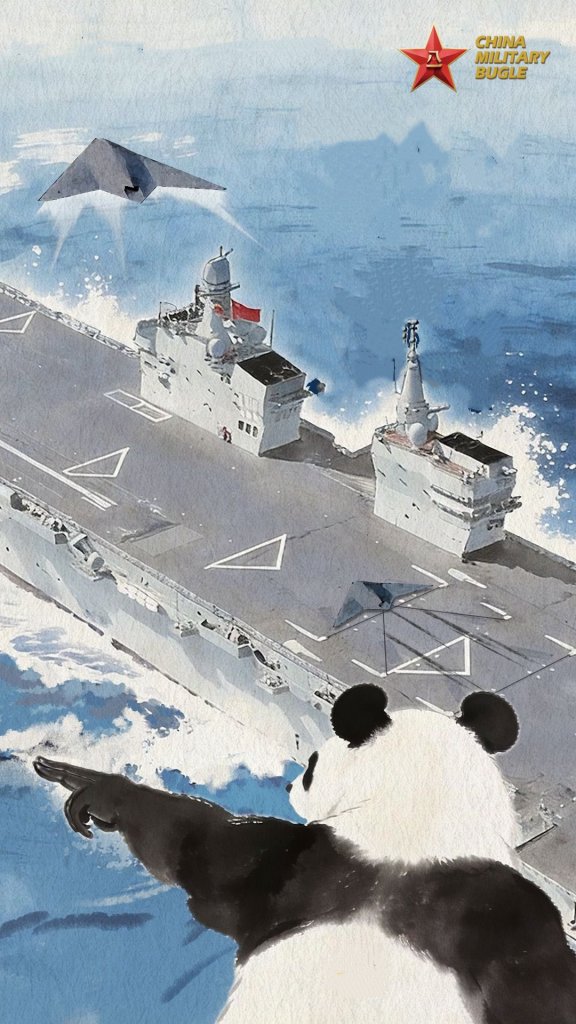
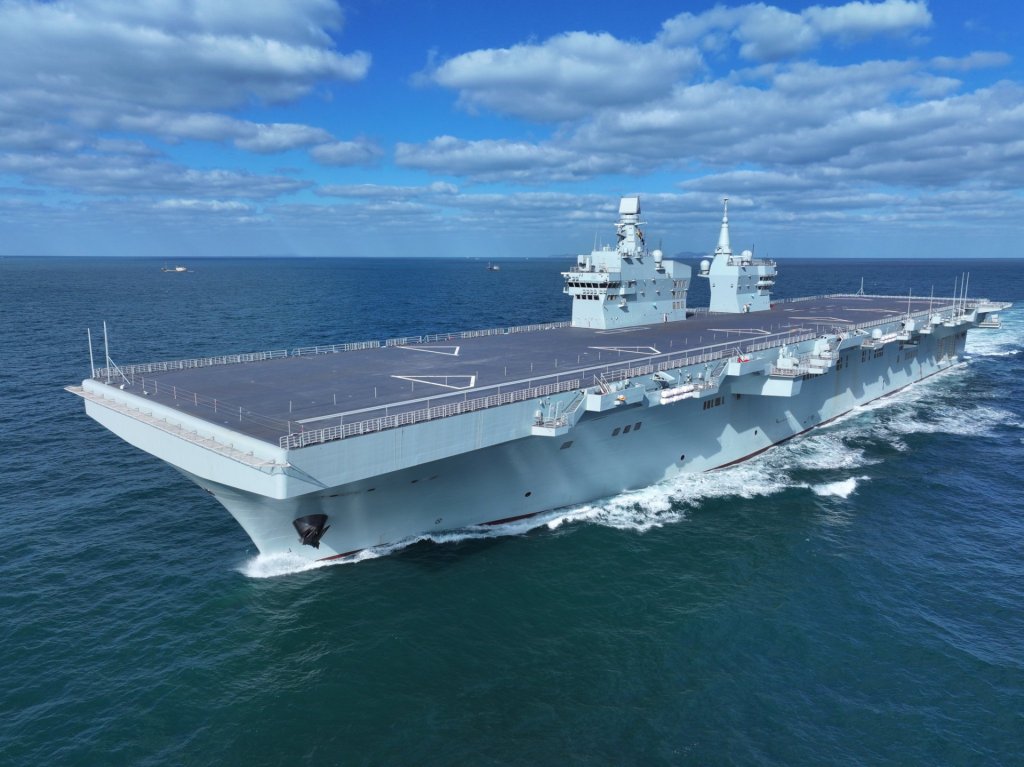
On October 30 2026, the People’s Liberation Army Navy announced that the GJ-21 unmanned combat aerial vehicle completed its first electromagnetic catapult launch and arrested-landing cycle aboard the Type 076 amphibious assault ship Sichuan (Hull 51). The test was described as a “major breakthrough” in China’s amphibious-ship programme and the first confirmed operation of a large stealth combat drone from such a vessel using carrier-style launch and recovery equipment.
02
Background & Context
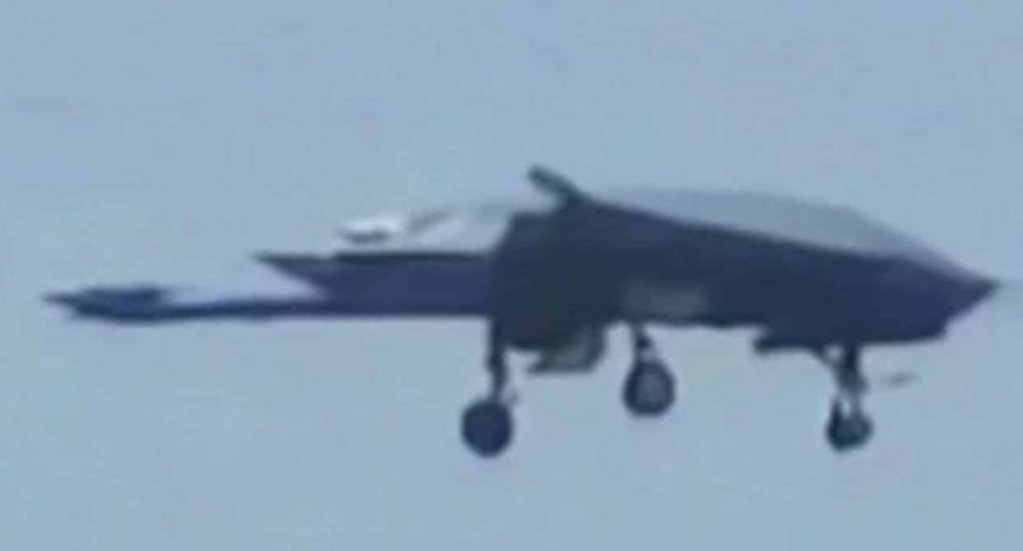
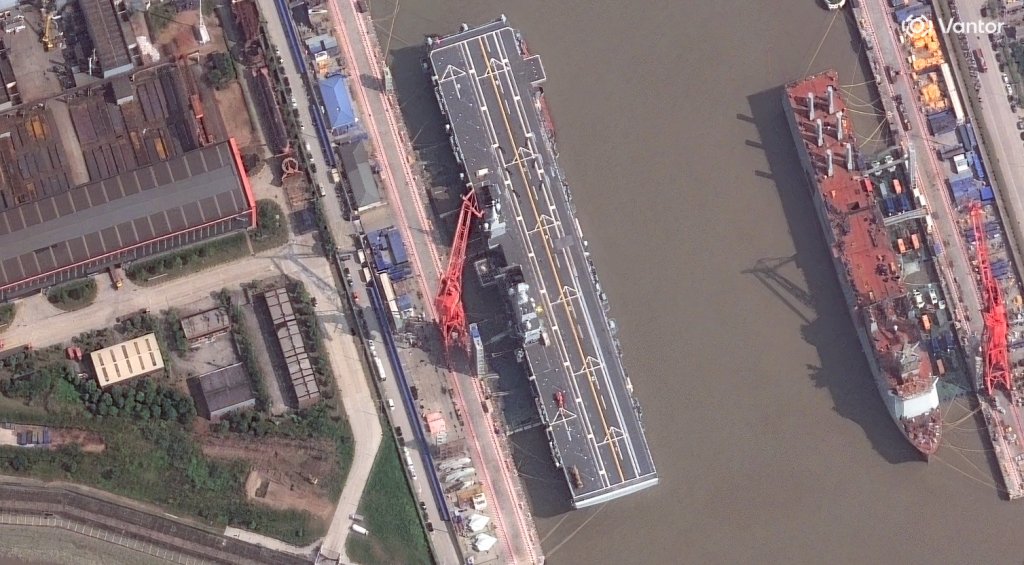
The Type 076 class is China’s first indigenous amphibious assault ship with an electromagnetic aircraft launch system (EMALS) and arresting gear. Sichuan, launched on December 27 2024, features an automated carrier-landing guidance system and integrated power. The GJ-21 is a navalised derivative of the land-based GJ-11 “Sharp Sword,” with a flying-wing layout, internal weapons bays and a low radar cross-section. Analyst Zhang Xuefeng notes its stealth performance is comparable to the J-35 and J-20 fighters, with a similar combat radius.
Visual evidence
Images from the story


03
Timeline
- September 3 2025 – GJ-21 displayed at a Beijing military parade.
- December 27 2024 – Launch and naming of Sichuan; equipped with EMALS and arresting gear.
- November 2025 – Sea trials began.
- July 2026 – Satellite imagery showed catapult testing with dead-load vehicles.
- October 30 2026 – PLAN announced successful GJ-21 launch and recovery aboard Sichuan.
04
Data & Statistics
- Displacement: ~50,000 tonnes, 39 % larger than Type 075.
- Flight deck width: 52–62 m; full-length deck with twin-island superstructure.
- Propulsion: Integrated electric system delivering 78 MW (42 MW gas turbines, 36 MW diesel generators).
- Drone capacity (projected): Up to 30 uncrewed aircraft, limited by hangar space.
- Combat radius (claimed): Comparable to J-20/J-35 fighters; specific figures not disclosed.
05
Official Statements & Responses
Xinhua linked the milestone to Beijing’s broader military-modernisation drive, emphasizing drone integration into naval operations. Analyst Song Zongping called the flight a “global first,” contrasting it with the U.S. Navy’s X-47B program, which did not achieve the same EMALS launch and arrested recovery on an amphibious assault ship. The China Military Bugle highlighted the ship’s automated landing guidance, EMALS and arresting system as key enablers.
06
Conflicting Reports & Gaps
No official photographs or video of the launch and recovery have been released. Independent verification remains limited; satellite or open-source imagery has not been publicly presented. Details on the number of cycles, payload weight, sortie generation rate and endurance are undisclosed, leaving quantitative assessment incomplete.
07
Why It Matters
Integrating a stealth UCAV with EMALS and arresting gear expands the PLAN’s options for long-range ISR and precision-strike missions without relying on manned aircraft. The capability could support amphibious task groups, act as a “loyal-wingman” to manned fighters such as the J-35, and free carrier-based air wings for other missions. Analysts note the drone-launch ability may enhance China’s power-projection in contested regions like the Taiwan Strait and the South China Sea, while also offering a platform for humanitarian assistance.
08
What’s Next
The PLAN has not announced further flight tests or a timetable for operational deployment of the GJ-21 from Sichuan or other vessels such as the carrier Fujian. Expected next steps include additional launch-recovery cycles, integration of weapons payloads and evaluation of sortie-generation rates, pending official confirmation.