
Full Breakdown
Intensified Israeli Counter-terror Operations in the West Bank After Hebron Shooting
By Drooid · · How we work
In this breakdown
01
Core Event
On October 23 2026, a terrorist shooting near the Yehuda Junction checkpoint outside Hebron killed Staff Sgt. Ron Yonatan Roytman, 23, and Sgt. Yuval Shai Svilem, 20, and wounded three other Israeli soldiers. The attackers, both 27-year-old residents of Hebron, were killed after a gunbattle lasting more than 20 minutes. In the days that followed, the Israel Defense Forces (IDF) launched a multi-village raid across the West Bank, demolishing the gunmen’s homes in Hebron, destroying two houses in Beita, and arresting eight suspects linked to weapons trafficking and explosives manufacturing. The operation also involved the demolition of 12 “terrorist monuments,” searches of roughly 300 locations, and the seizure of a hunting rifle, a handgun, ammunition and an unidentified electronic device found in an underground shaft near a Hamas suspect’s home.
02
Background & Context
The Hebron attack came amid rising tension in the West Bank following the October 7 2023 Hamas assault. Israeli authorities had placed the region on the “highest state of alert” and were preparing for a national election scheduled for early November 2026. The IDF’s strategy combines counter-terror raids with preventive measures such as “breathing closures” and roadblocks to limit movement in flashpoint areas.
Visual evidence
Images from the story

03
Data & Statistics
- Casualties: 2 Israeli soldiers killed, 3 wounded; 2 Palestinian gunmen killed.
- Arrests: 8 individuals detained, including a suspected explosives trafficker and a weapons-manufacturing suspect.
- Demolitions: 12 terrorist-related monuments destroyed; 2 homes in Beita demolished; homes of the Hebron gunmen sealed pending demolition.
- Searches: Approximately 300 locations examined across the West Bank.
- Seizures: Hunting rifle, handgun, ammunition, electronic device; additional illegal vehicles and weapons recovered in Hebron raids.
04
Official Statements & Responses
Prime Minister Benjamin Netanyahu ordered a “more aggressive counterterrorism model” in Hebron, directing a full cordon of the city and the sealing of the attackers’ homes. IDF Chief of Staff Lt. Gen. Eyal Zamir placed the military on its highest alert level, cancelled soldiers’ leave, and said the measures aim to ensure the upcoming election proceeds “without external interference.” The Shin Bet supplied intelligence for the arrests, and the Judea and Samaria Division oversaw the broader raid network.
05
On-the-Ground Reports
Undercover units, including the Duvdevan commando and Yamam Border Police, conducted nighttime raids in villages such as Yasid and Beita, arresting suspects linked to Hamas and other militant groups. Residents of Hebron reported the displacement of roughly 2,000 Palestinians as troops sealed neighborhoods. In the village of Jalud, a fire broke out during a clash between Israeli settlers and soldiers; the circumstances remain under investigation.
06
Verbatim Quotes
- “I commend our heroic soldiers who acted decisively and prevented a major attack, and I wish our wounded a speedy recovery,” — Benjamin Netanyahu, prime minister
07
Conflicting Reports & Gaps
- The exact number of suspects detained varies between sources: some report “approximately 50 suspects” in Hebron, while others cite “eight wanted individuals” across the wider West Bank operation.
- Details about the underground shaft discovered near a Hamas suspect’s home are limited to its depth (? 15 meters) and the presence of an unidentified electronic device; the device’s purpose remains unconfirmed.
08
What’s Next
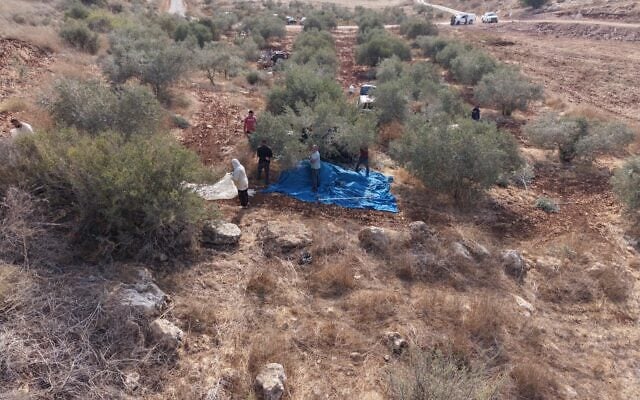
The IDF will continue demolition of the sealed homes of the Hebron attackers, pending High Court review. A nationwide equipment-return campaign is scheduled for November 1-12, offering soldiers and reservists anonymous drop-off points for unauthorized military gear. Security forces will maintain “breathing closures” and heightened patrols throughout the election period, with additional troops deployed to protect olive-harvest sites and deter potential copycat attacks.