
Full Breakdown
Britain’s “Be Ready” Campaign Aims to Boost Household Resilience
By Drooid · · How we work
In this breakdown
01
Launch of the “Be Ready” Emergency-Preparedness Campaign
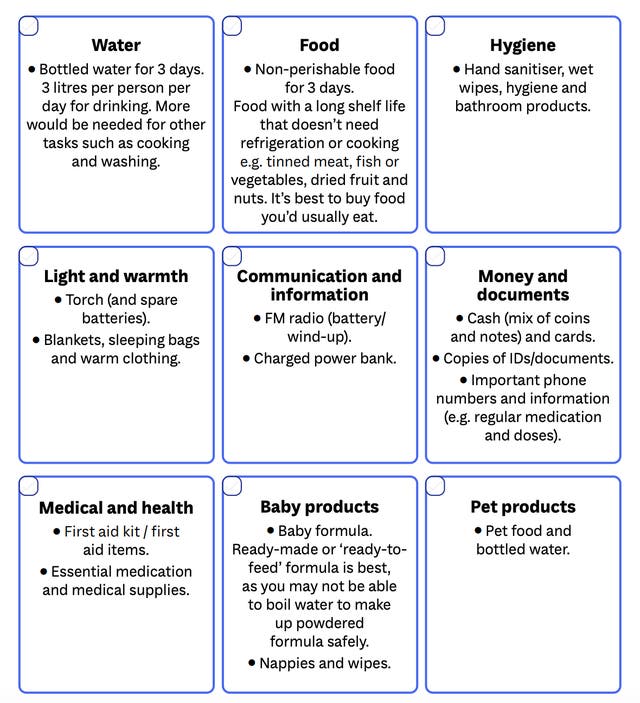
The UK government has introduced a three-year “Be Ready” initiative designed to encourage households to stock essential supplies for short-term disruptions. Defence Secretary Wes Streeting announced updated guidance that recommends keeping a three-day reserve of cash, bottled water, tinned food, prescription medication and backup power sources such as wind-up radios and torches. A new website provides a downloadable checklist to help families assemble kits gradually rather than all at once.
Watch
Related reporting
ex
The best foods to stockpile for an emergency
02
Context of Emerging Threats
Streeting framed the campaign against a backdrop of heightened risks, including extreme weather, cyber attacks, and the possibility of armed conflict. He warned that adversaries could be positioned to launch an attack on the UK by 2030, giving “a little over 1,000 days” to achieve readiness with allies. The statement referenced Russian aggression and cited warnings from Vladimir Putin’s government that British facilities in Ukraine could become “legitimate targets” if used against Russia. The Independent also reported frequent rogue-drone activity near Ministry of Defence sites, with 340 incidents recorded in the year to August 2026, double the number logged in the preceding year.
Visual evidence
Images from the story

03
Key Data on Security Incidents and Supply Trends
- Drone-related security incidents rose from 126 to 250 in 2025, then to 340 by August 2026, according to freedom-of-information data.
- Sales of tinned food, wind-up radios and torches have surged since the guidance was released.
- Analysts at investment bank Shore Capital warned that five consecutive heatwaves this summer have created Britain’s “worst food-security crisis in decades,” potentially threatening harvests and increasing reliance on imports.
- The National Farmers Union described the situation as “increasingly concerning,” noting that dairy farms are already using winter feed because grass growth has stalled.
04
Government Messaging and Policy Details
Streeting emphasized a “whole-society approach” while urging the public to remain “alert not alarmed.” He highlighted that emergency kits should be stored in an easily located spot and that backup batteries be kept fully charged. The campaign also advises businesses to assess their own preparedness. Andy Burnham’s administration is positioning national resilience as a priority in response to the identified threats.
05
Potential Implications for Food Security and National Resilience
If households adopt the recommended kits, the UK could mitigate short-term disruptions from power outages, water cuts or supply chain interruptions. However, analysts caution that extreme heat and drought may still strain food production, and the growing frequency of drone incidents underscores vulnerabilities in critical infrastructure. The “Be Ready” drive therefore seeks to complement broader defence and climate-adaptation strategies by fostering individual preparedness.