
Full Breakdown
Sharp Rise in Afghanistan’s Opium Cultivation Undermines Taliban Ban
By Drooid · · How we work
In this breakdown
01
Surge in Opium Production in 2026
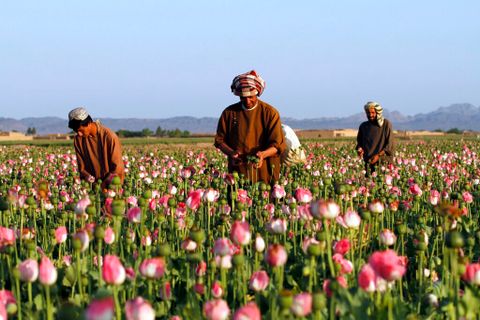
The United Nations Office on Drugs and Crime (UNODC) 2026 Afghanistan Opium Survey estimates cultivated poppy area grew from roughly 10,000 hectares in 2025 to more than 43,000 hectares in 2026—a 330 % increase. Estimated opium output rose from about 300 metric tons to just under 1,500 metric tons, a 400 % jump. The growth marks the first sizable reversal since the Taliban’s April 2022 prohibition on poppy cultivation.
02
Background & Context
The Taliban outlawed opium poppy cultivation in April 2022 on religious grounds. The ban initially drove cultivation down sharply, but international aid cuts, isolation over women’s-rights restrictions, and persistent poverty have eroded its effectiveness.
Visual evidence
Images from the story
03
Data & Statistics
- Cultivation area: 43,300 ha (2026) vs. 10,200 ha (2025).
- Production: 1,466 t (2026) vs. 296 t (2025).
- Regional shift: 76 % of cultivated area now in the northeast (Badakhshan, Takhar, etc.). Badakhshan alone grew from ~6,600 ha to nearly 29,500 ha.
- Yield: 33.8 kg/ha (2026) vs. 29 kg/ha (2025).
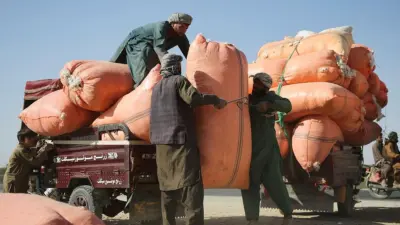
- Revenue: Opium sales generated an estimated US $525 million in 2026, about 2.7 % of Afghanistan’s GDP.
- Prices: Dried opium averaged US $500/kg in 2026, down from US $570/kg in 2025 but far above pre-ban levels.
04
Farmers’ Conditions
Field reports describe farmers concealing small poppy plots within wheat and barley fields or behind mud-walled compounds to evade Taliban eradication teams. Staggered planting and harvesting schedules are also used to reduce the risk of total loss.
05
Official Statements & Responses
- Taliban: Foreign Minister Amir Khan Muttaqi called the anti-narcotics campaign a “greatest achievement” and said an effective fight “is a shared responsibility of both Afghanistan and the international community.”
- The Ministry of Interior’s counter-narcotics department contested UN figures, estimating cultivation at about 24,000 ha and claiming eradication of roughly 23,000 ha before harvest.
06
Conflicting Reports & Gaps
UNODC’s satellite analysis reports a 43,000-ha cultivation figure, while the Taliban’s interior ministry asserts the area is roughly half that size. UNODC could not verify the Taliban’s eradication numbers. The agency also noted that stockpiles used to buffer the 2022 supply shock appear to be depleting, but precise quantities remain unconfirmed.
07
Verbatim Quotes
- “Combine this with the active trafficking networks within the country and the resilient smuggling operations to get the opiates out of the country, and you have a very bleak prediction for the future,” — Paddy Ginn, analyst, Global Initiative Against Transnational Organized Crime
- “An effective fight against this phenomenon is a shared responsibility of both Afghanistan and the international community,” — Amir Khan Muttaqi, Taliban foreign minister
08
What’s Next
UNODC says continued monitoring is essential to determine whether the 2026 rise is a temporary adjustment or the start of a broader resurgence. The agency urges greater investment in alternative livelihoods—agricultural training, financing, and market access—particularly in the northeast where cultivation has surged. No specific future dates for additional surveys or policy actions were disclosed.