
Full Breakdown
India’s NVS-03 Launch: A Critical Step to Revive the NavIC Constellation
By Drooid · · How we work
In this breakdown
01
Core Event
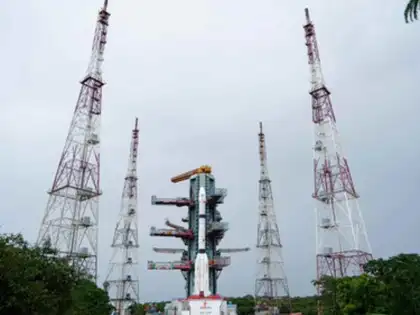
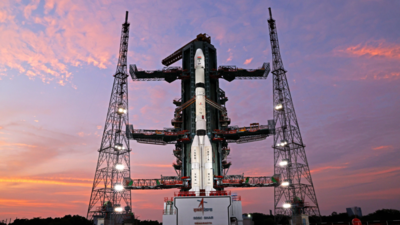
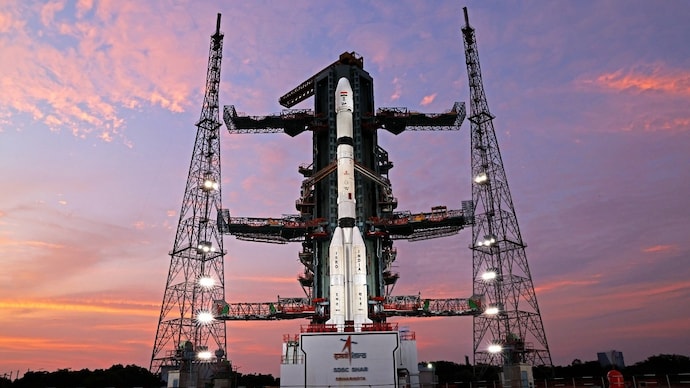
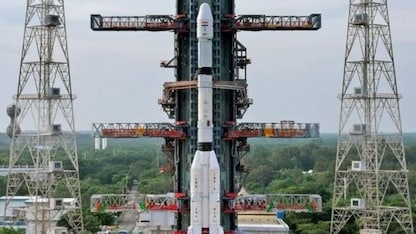
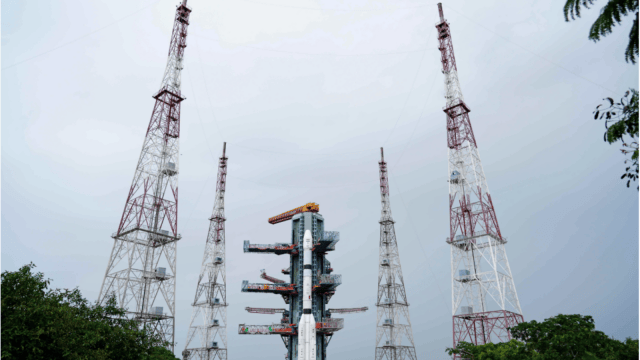
On October 30 2026 at 23:51 IST the Indian Space Research Organisation (ISRO) will launch the Geosynchronous Satellite Launch Vehicle (GSLV-F18) from the Second Launch Pad at Satish Dhawan Space Centre, Sriharikota, carrying the navigation satellite NVS-03. The mission aims to place the 2,250-kg spacecraft into a Geosynchronous Transfer Orbit (GTO) and, after orbit-raising manoeuvres, insert it into its final geostationary slot to augment the Navigation with Indian Constellation (NavIC) system.
02
Background & Context
NavIC, originally the Indian Regional Navigation Satellite System (IRNSS), was conceived after the 1999 Kargil conflict to reduce reliance on foreign GNSS services. The first-generation constellation (2013-2018) suffered atomic-clock failures and launch anomalies, leaving the system below the minimum four operational satellites required for independent positioning. Recent setbacks include:
- March 13 2026 – the atomic clock on IRNSS-1F failed.
- January 29 2025 – NVS-02 reached GTO but could not fire its Liquid Apogee Motor due to a pyrotechnic-valve signal fault.
These incidents prompted ISRO to develop indigenous rubidium atomic clocks and revise propulsion procedures for the next-generation NVS series.
Visual evidence
Images from the story

03
Timeline
Swipe across the table to see all columns.
| Date | Event |
|---|---|
| April 28 2016 | PM Narendra Modi announced the name NavIC. |
| May 29 2023 | NVS-01 launched, first with an indigenous atomic clock. |
| January 29 2025 | NVS-02 launch; orbit-raising failure identified. |
| March 13 2026 | IRNSS-1F clock failure reported. |
| October 29 2026 | ISRO chairman Dr V Narayanan confirmed launch schedule. |
| October 30 2026 | Scheduled GSLV-F18/NVS-03 launch. |
04
Data & Statistics
- Satellite mass: ? 2,250 kg.
- GTO parameters: perigee ? 170 km, apogee ? 37,023 km, inclination ? 20.75°.
- NavIC coverage: India plus a 1,500 km radius.
- Operational NavIC satellites (July 29 2026): three (IRNSS-1B, IRNSS-1I, NVS-01).
- Minimum for standalone positioning: four satellites (Union Minister Jitendra Singh).
05
Why It Matters / Impact
NVS-03 carries an indigenous atomic clock and adds the civilian L1 frequency to the existing L5 and S-band signals, improving compatibility with smartphones and mass-market receivers. Accurate timing underpins telecommunications, finance, power grids, transportation and defence; nanosecond-level errors can translate into hundreds of metres of positional error. Restoring a four-satellite baseline would enable NavIC to provide independent positioning, reducing strategic vulnerability to foreign GNSS disruptions.
06
Conflicting Reports & Gaps
Sources differ on the current number of NavIC satellites delivering positioning signals. Business-Standard and Hindustan Times report three operational satellites, while NDTV suggests NVS-03 will raise the count to four immediately. A parliamentary reply dated July 29 2026 confirms three operational satellites, indicating the “four-satellite” claim reflects an anticipated post-launch status. Independent verification of the new pyrotechnic-valve configuration for NVS-03 remains limited.
07
Verbatim Quotes
- “NVS-03 carries an indigenous atomic clock alongside procured clocks and introduces the L1 signal, in addition to the existing L5 and S signals,” — ISRO.
- “The launch of NVS-03 is a significant milestone for India’s indigenous navigation capabilities, particularly given the gaps in the NavIC constellation over the past few years,” — Lt Gen AK Bhatt.
The NVS-03 mission tests engineering fixes introduced after the NVS-02 anomaly and India’s ambition for an autonomous regional navigation capability. Success will depend on the rocket’s performance and the satellite’s ability to complete orbit-raising manoeuvres and validate its timing hardware. Subsequent launches of NVS-04 and NVS-05 are planned, aiming for a fully redundant seven-satellite NavIC constellation.