
Full Breakdown
Ancient Martian Meteorite Teghaza 001 Offers a Rare Glimpse of Early Mars
By Drooid · · How we work
In this breakdown
01
Discovery and Dating
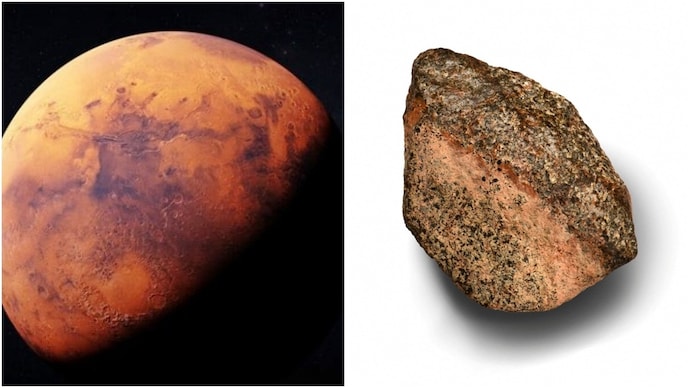
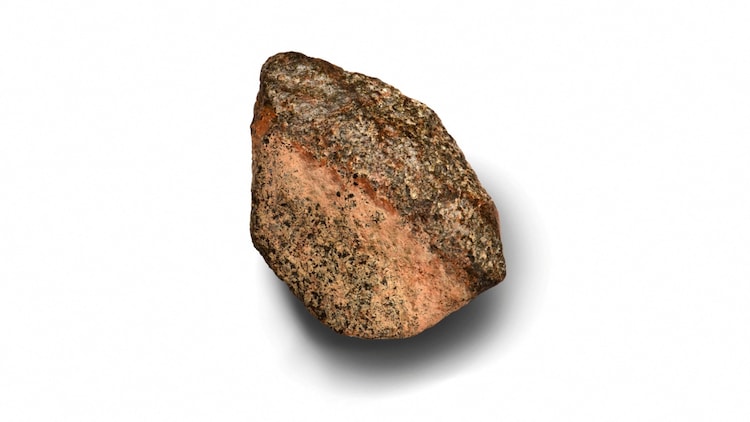
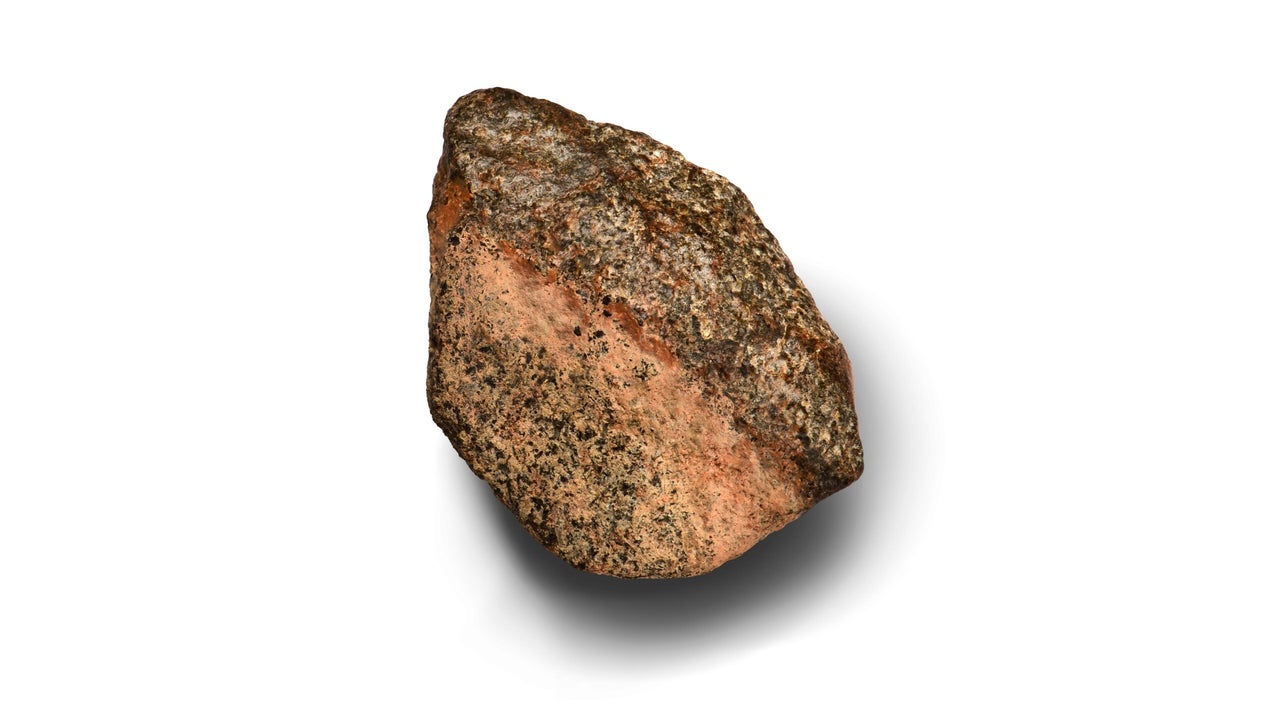
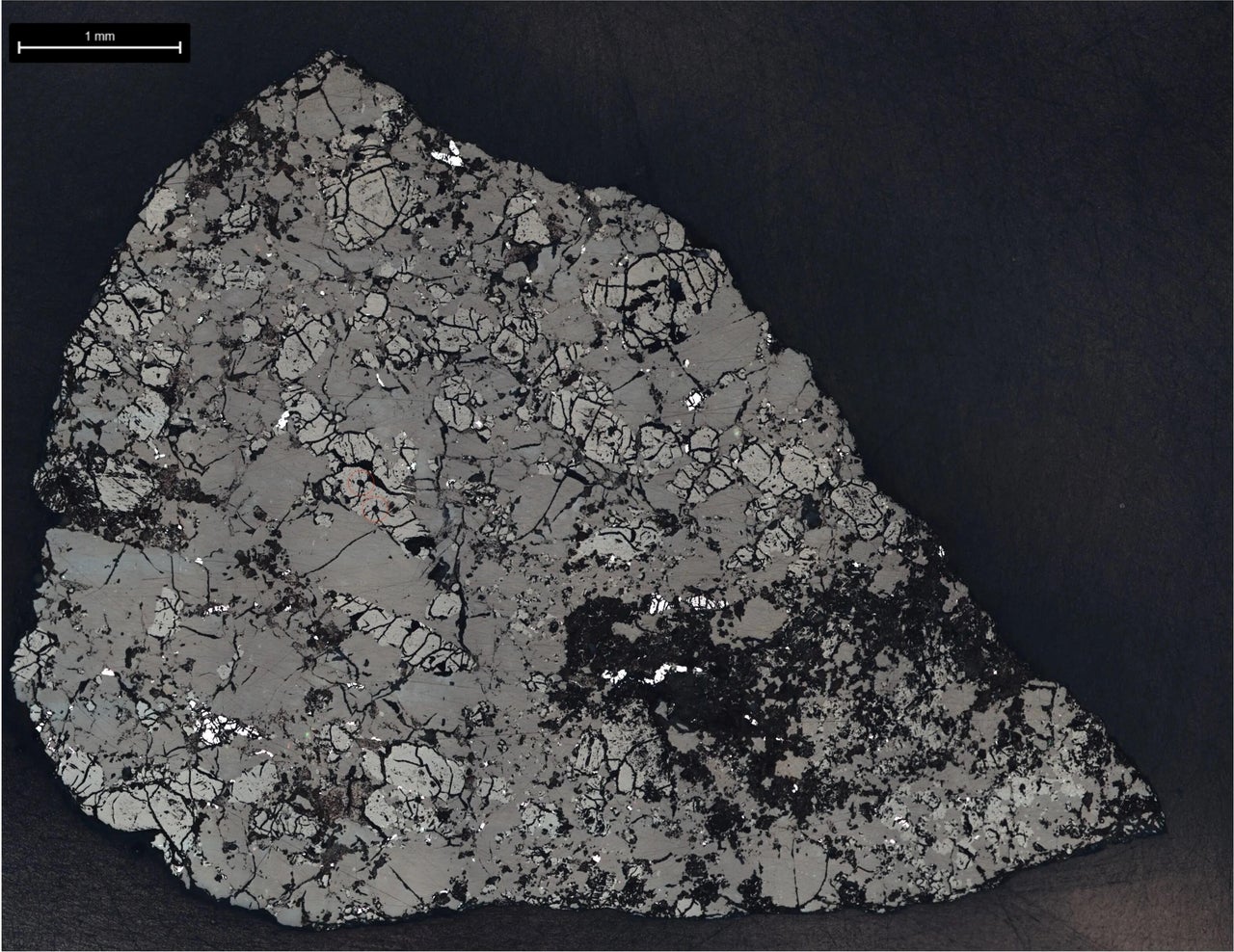
A rose-colored rock weighing about 800 g was recovered in the Sahara Desert of Mali in 2022 and named Teghaza 001 after the local salt plain. NASA-funded researchers applied an in-situ rubidium-strontium dating technique to zircon crystals smaller than a fingernail. Ten U-Pb and Pb-Pb measurements on six shocked grains yielded ages of >= 4.1 billion years, placing the meteorite among the three oldest Martian samples known on Earth. The study, published in *Science*, describes the find as a “snapshot in time” of Mars’ early crust.
02
Scientific Context
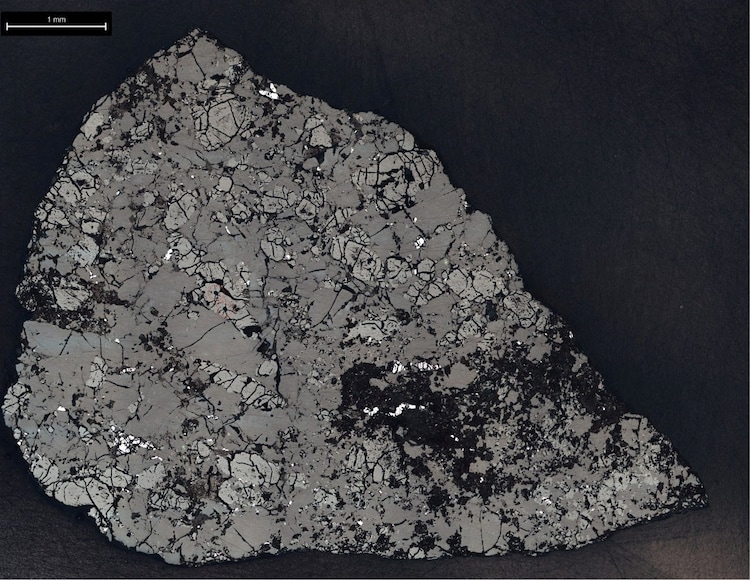
Only roughly 435 Martian meteorites have been identified, most of which are young basaltic rocks. Earlier ancient specimens—such as ALH84001 (? 4.4 Ga) and Black Beauty (? 2.1 Ga)—provide limited views of the planet’s past. Teghaza 001 differs from typical shergottites: its texture and mineral mix (including zircon, pigeonite, and manganese-oxide-rich domains) match observations of the southern highlands made by the Mars Reconnaissance Orbiter, suggesting an origin in that heavily cratered region.
Visual evidence
Images from the story

03
Key Researchers
- Yang Liu – lead author, NASA Jet Propulsion Laboratory (JPL) and Caltech.
- Francis Tissot – coauthor, Caltech, developer of the rubidium-strontium dating method.
- Carl Agee – director, University of New Mexico Institute of Meteoritics.
- Lee Saper – coauthor, NASA Ames Research Center.
04
Data and Findings
- Zircon crystals contain uranium that decays to lead, allowing precise age determination.
- Oxygen-18 isotopic ratios are enriched, indicating interaction with ^18O-rich fluids on Mars.
- High manganese-oxide concentrations and altered pigeonite interiors point to aqueous alteration of the rock.
- The meteorite’s composition is distinct from other Martian samples yet shares oxygen-isotope similarities with Black Beauty.
05
Implications for Early Mars
The water-alteration signature dated to ~4.1 Ga suggests that Mars possessed a dynamic water cycle far earlier than most rover-based evidence. This supports models of a Pre-Noachian environment that may have been warmer, wetter, and possibly shielded by a magnetic field. As a physical sample, Teghaza 001 complements orbital and rover observations of ancient river channels, lake deposits, and hydrated minerals, helping to refine the timeline of Mars’ transition from a potentially habitable world to today’s cold desert.
06
Official Statements & Responses
Tissot noted that his laboratory is among the few worldwide capable of performing this type of age-dating and that the work paves the way for dating additional planetary samples.
07
Verbatim Quotes
- “It was only after we started looking closely that we realized this meteorite is really unique,” — Yang Liu
- “Right now, we are one of very few labs in the world able to perform this kind of age-dating, and the first to date such an ancient Martian meteorite,” — Francis Tissot
- “I realized that this one was a little bit like Black Beauty, not exactly, but it resembled it in the oxygen isotope values,” — Carl Agee
08
Timeline
- 2022 – Fragments of Teghaza 001 recovered in Mali’s Teghaza salt plain.
- June 2024 – Study on the meteorite’s water content published in *Science Advances*.
- Thursday, 2024 – Primary age-dating and alteration results published in *Science*.
09
Why It Matters
The meteorite provides direct laboratory evidence that early Mars experienced surface-water activity and a more complex crustal evolution than inferred from younger samples alone. Its unique composition and age make it a valuable benchmark for testing models of planetary differentiation, atmospheric loss, and early habitability potential of the Red Planet.